Consolidate Multiple Worksheets Into One

Ever found yourself swimming in a sea of spreadsheets, each one a tiny island of information, but you wish they'd all just hang out together in one big, happy workbook? Well,...

Ever found yourself swimming in a sea of spreadsheets, each one a tiny island of information, but you wish they'd all just hang out together in one big, happy workbook? Well, friend, you're not alone. And guess what? You can make that happen! Today, we're going to chat about consolidating multiple worksheets into one. It's like turning your spreadsheet solo act into a full-on, harmonious choir.
Why Bother, You Ask?
Imagine you're planning a big party. You've got one spreadsheet for the guest list, another for the menu, and a third for the playlist. Now, wouldn't it be a whole lot easier if all that info was in one place? You could see at a glance who's coming, what they're eating, and what they'll be dancing to. That's the power of consolidation, folks!
But wait, there's more! Consolidating worksheets can help you spot patterns, make better decisions, and save time. It's like having a superpower that lets you see the big picture without all the clutter. So, let's dive in and make your spreadsheets work together, not against each other.
Must Read
Meet Our Magic Wand: The SUMIF Function
Alright, so we can't actually wave a magic wand. But we can use something almost as cool: the SUMIF function. This little guy is like our secret weapon for consolidating data. It lets us add up numbers from different worksheets based on certain conditions. Neat, huh?
Let's say you're running a small business, and you've got sales figures in separate worksheets for each month. You want to know your total sales for the year. With SUMIF, you can add up all those sales in a jiffy, no matter where they're hiding.
Here's the basic syntax:
=SUMIF(range, criteria, [sum_range])
 How to Consolidate Multiple Excel Worksheets into One PivotTable
Don't worry if it looks a bit scary. We'll break it down in a sec. But first, let's meet our trusty sidekick, the SUMIFS function. This one's even more powerful, as it lets you add multiple conditions. It's like having a filter on top of a filter!
Let's Get Practical
Alright, let's say you've got two worksheets, 'Sales Jan' and 'Sales Feb'. Both have columns for 'Region' and 'Sales'. You want to know the total sales for each region across both months. Here's how you'd do it:
- In a new worksheet, let's call it 'Sales Total', create a table with 'Region' and 'Total Sales' columns.
- In the 'Total Sales' cell for 'North', enter this formula: =SUMIFS(Sheet1!C2:C100, Sheet1!A2:A100, "North") + SUMIFS(Sheet2!C2:C100, Sheet2!A2:A100, "North")
- Drag this formula down to copy it for the other regions.
Voilà! You've just consolidated your sales data. Wasn't that easy?
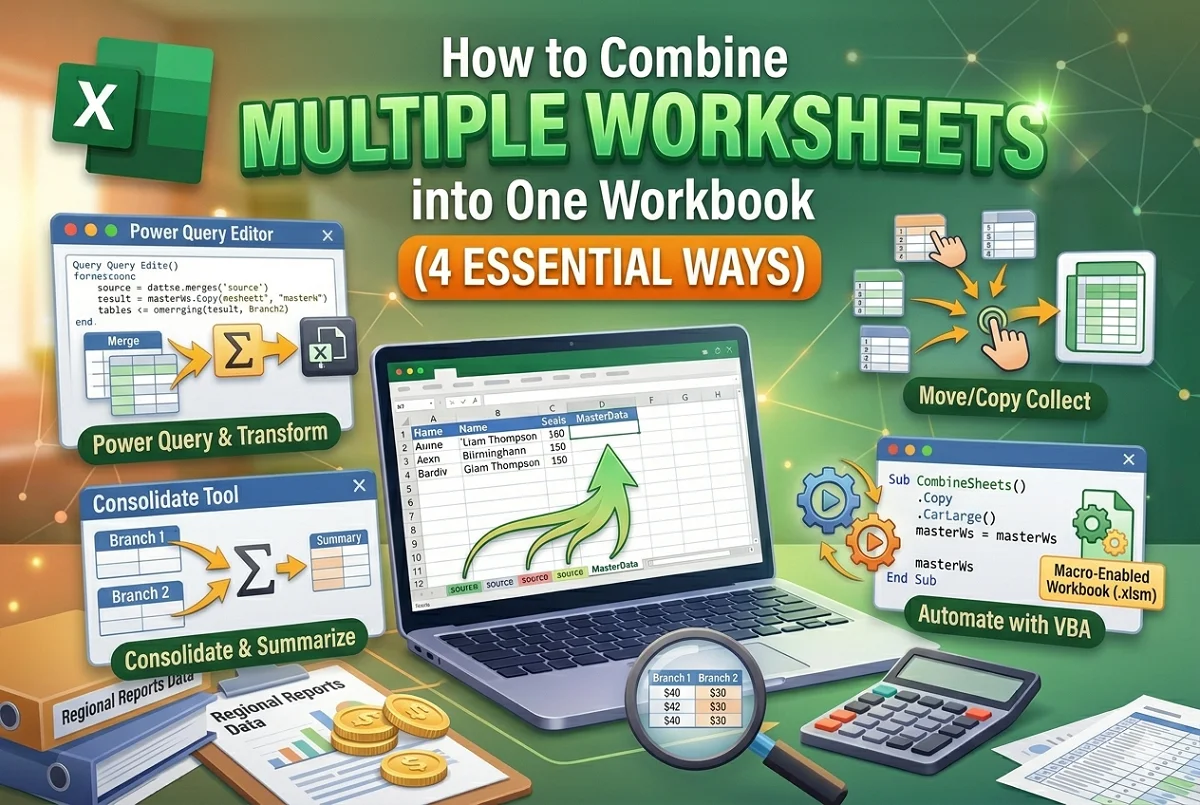 How to Combine Multiple Worksheets into One Workbook in Excel - Excel
But What If I Want to Consolidate More Than Two Worksheets?
No problemo! You can use the SUMIFS function with multiple criteria ranges. But if you've got a lot of worksheets, it can get messy. That's where the INDEX and MATCH functions come in. They're like the dream team of consolidation, working together to bring you the data you need, no matter where it's hiding.
But that's a story for another time. For now, you've got the basics down. You're ready to start consolidating like a pro!
Final Thoughts
So there you have it, folks. Consolidating worksheets isn't just for spreadsheet nerds (though we do love our nerdy friends). It's for anyone who wants to make their data work for them, not against them. It's like going from a messy garage to a neat, organized space where you can actually find what you need. And who doesn't want that?
So, go forth and consolidate. Make your spreadsheets sing in harmony. And remember, if you ever get stuck, there's always the trusty SUMIF function to bail you out. Happy consolidating!
