Finding Links To External Sources In Excel

So, there I was, drowning in a sea of data, trying to make sense of it all in Excel. I mean, don't get me wrong, I love Excel. It's like my trusty sidekick, always ready to cr...
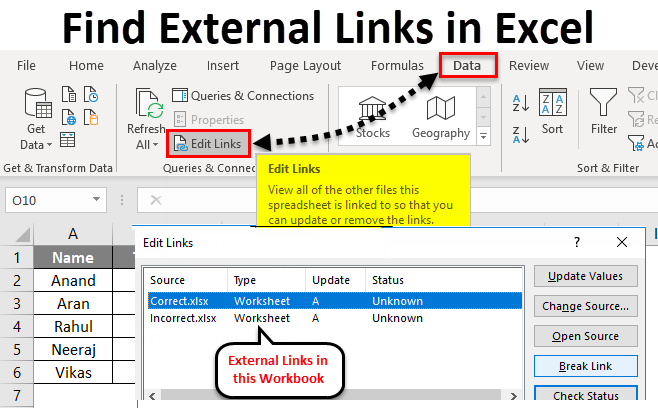
So, there I was, drowning in a sea of data, trying to make sense of it all in Excel. I mean, don't get me wrong, I love Excel. It's like my trusty sidekick, always ready to crunch numbers and make my life easier. But this time, it was like trying to find a needle in a haystack. I needed to link to some external sources, and I had no idea where to start.
You might be in the same boat, right? You've got your data, you've got your formulas, but you're missing that crucial piece of the puzzle - those external sources that can add depth and credibility to your analysis. Well, grab a coffee, because we're about to dive into the world of linking external sources in Excel. And don't worry, I promise to keep the tech jargon to a minimum. We're friends, not robots, after all.
Why Link to External Sources?
Before we get our hands dirty, let's talk about why you might want to link to external sources in the first place. Imagine you're working on a report about the stock market. You've got your data all set up, but it's just numbers on a page. By linking to external sources, like news articles or financial reports, you can provide context, support your analysis, and make your report way more engaging.
Must Read
Plus, think about it - data can change. By linking to external sources, you're not just providing a snapshot in time, you're creating a living, breathing document that can grow and change with your data. Pretty neat, huh?
Linking to Web Pages
Alright, let's get down to business. First up, we've got linking to web pages. You know, those things you spend hours scrolling through when you should be working. But hey, we won't tell if you don't.
To link to a web page in Excel, you'll want to use the HYPERLINK function. It's as easy as typing =HYPERLINK("URL", "Link Text") into a cell. The "URL" is the address of the web page you want to link to, and the "Link Text" is the text that will appear in your cell. Easy peasy, lemon squeezy.
But wait, there's more! You can also make your links open in a new tab. Just add ";newtab" to the end of your URL. For example, =HYPERLINK("https://www.example.com;newtab", "Example"). Now, when you click on that link, it'll open in a new tab, leaving your Excel sheet right where you left it. Magic, I know.
 Find Links In Excel - Examples Of Finding External Links In Excel
Linking to Other Excel Files
Now, what if you want to link to another Excel file? Maybe you've got a big project with lots of different sheets, and you want to connect them all together. Well, you're in luck, because Excel makes that super easy too.
First, you'll want to make sure your target file is saved. Then, in the cell where you want to create the link, type an equals sign (=), then click on the cell in the other file that you want to link to. Press enter, and boom - you've got yourself a link. It's like Excel's version of a secret handshake.
But what if you want to link to a specific range of cells, not just a single cell? No problem. Just select the range of cells you want to link to, then click on the cell in your source file where you want to create the link. Press enter, and voila! You've got a link to a range of cells.
Keeping Your Links Up to Date
Now, here's where things get a little tricky. You've got your links all set up, you're feeling pretty good about yourself. But then, disaster strikes. The web page you linked to changes its URL, or the file you linked to gets moved or renamed. Suddenly, your links are broken, and your document is a hot mess.
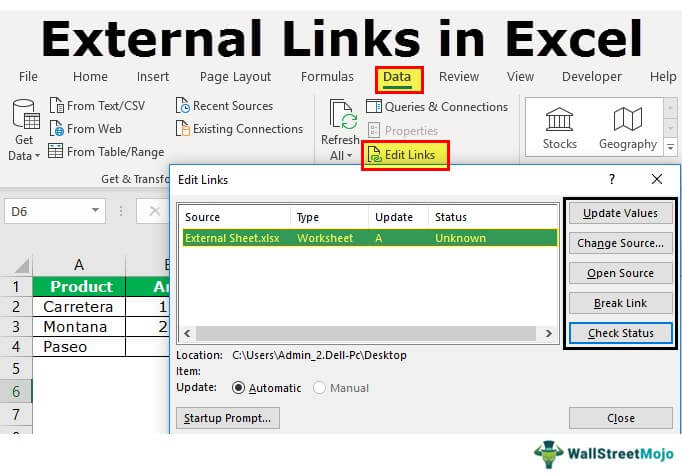 Excel External Links | How to Find & Remove External Links in Excel?
Fear not, my friend. Excel has a feature just for this situation - the INDIRECT function. When you use the INDIRECT function to create a link, Excel doesn't hard-code the link into your document. Instead, it creates a dynamic link that can change with the data. Pretty nifty, huh?
To use the INDIRECT function, just type =INDIRECT("URL") or =INDIRECT("FileName") into a cell. When the URL or file name changes, your link will automatically update to reflect the new location. It's like having a little Excel elf that follows you around, fixing your broken links. I like to call mine "Linky McLinkface".
When in Doubt, Ask for Help
Alright, that's it. You're now a linking pro, ready to take on the world of external sources in Excel. But hey, I get it. Sometimes, even the best of us get stuck. If you're feeling lost, don't be afraid to ask for help. There are tons of resources out there, from online forums to Excel gurus who are just waiting to share their knowledge.
And remember, you're not alone. We're all in this data-driven world together, trying to make sense of it all one link at a time. So, keep exploring, keep learning, and most importantly, keep your data (and your links) straight.
Until next time, happy linking!
