How Can I Test My Comcast Internet Speed

Ever wonder if your internet is actually as fast as Comcast claims? Spoiler: It’s probably not *exactly* the same as that flashy ad where the video loads in slow motion. Testi...

Ever wonder if your internet is actually as fast as Comcast claims? Spoiler: It’s probably not exactly the same as that flashy ad where the video loads in slow motion. Testing your speed is like checking if your car’s speedometer is lying—except instead of miles per hour, we’re talking megabits per second (Mbps), and the stakes are just as high for binge-watching, gaming, or avoiding that dreaded "buffering" wheel.
Why bother testing at all? Imagine your internet as a highway. If it’s clogged with traffic (aka other people streaming Netflix at 3 AM), your speeds might feel sluggish. Testing gives you the data to know if you’re paying for a highway or a one-lane dirt road. Plus, it’s weirdly satisfying to see those numbers pop up—like when you finally beat a game you’ve been stuck on for weeks.
How to Test Your Speed: The No-Fluff Guide
You don’t need a PhD in networking to check your speed. Just grab your phone, tablet, or laptop and head to a trusted speed test site. Speedtest.net (by Ookla) is the OG—like the original PlayStation of speed tests. It’s free, easy, and gives you a clear breakdown of your download and upload speeds, plus ping (which we’ll get to later).
Must Read
Before you hit "Go," close any apps or tabs hogging bandwidth. Think of it like clearing your desk before timing how fast you can fold laundry—you want accurate results, not a mess of distractions. Pro tip: Test during off-peak hours (like late at night) if you suspect your neighbors are hogging the pipe.
What Are You Even Testing?
Download speed is how fast your internet pulls data from the web—like downloading a movie or streaming a show. Upload speed is how fast you push data, which matters if you’re video calling, gaming online, or uploading selfies to Instagram. Ping (or latency) is how quickly your device communicates with the server, measured in milliseconds. Low ping is smooth; high ping is like waiting for a snail to deliver your pizza.
Most people only care about download speed, but upload matters too—especially if you’re a remote worker or a TikToker editing videos. Comcast’s advertised speeds are like the "up to 100 mph" signs on highways: they’re the best-case scenario, not the reality you’ll always get. Your actual speed depends on your plan, router, and how many people are using it.
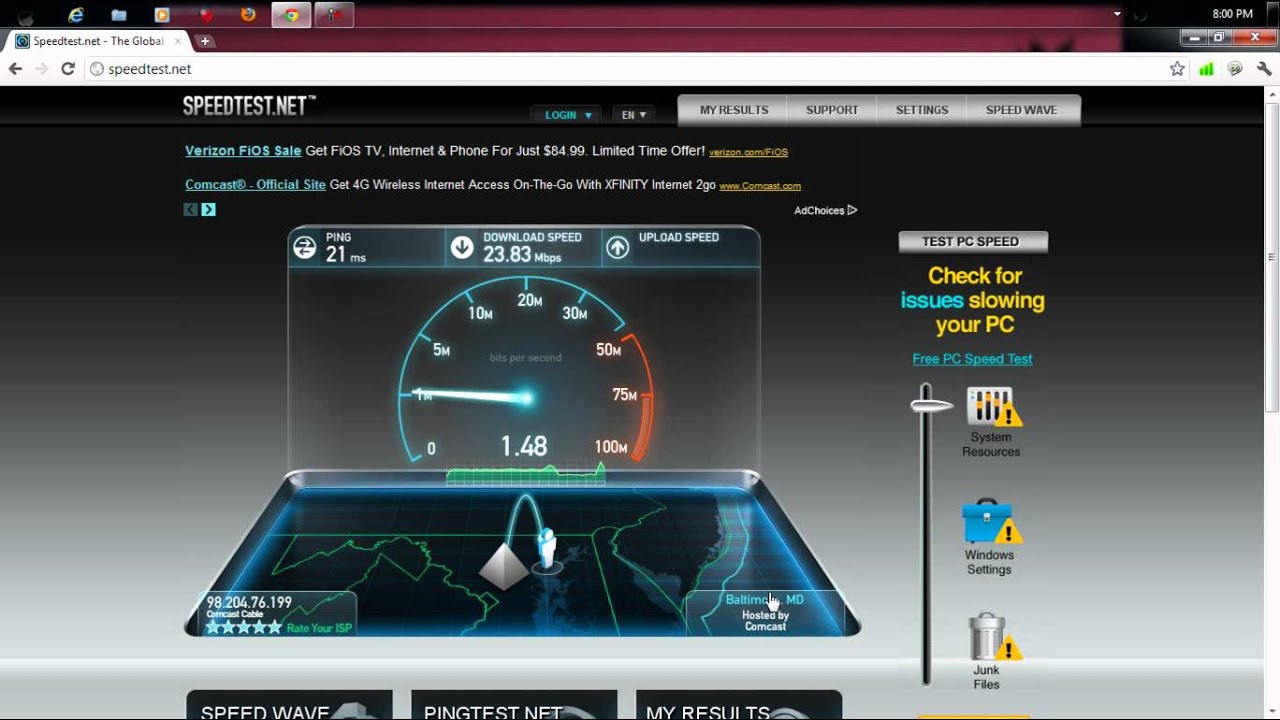 Comcast Xfinity Internet Speed Test - YouTube
When Should You Test?
If your Wi-Fi feels slow but you’re not sure why, testing is your detective hat. Is it your router? Your plan? Your neighbor’s cat (okay, maybe not the cat, but their internet usage)? Run the test a few times at different times of day to see if speeds fluctuate. If you’re consistently getting speeds that are way below what Comcast promises, it might be time to chat with their support team.
Another fun experiment: Test your speed on different devices. Your phone might feel faster than your laptop, or vice versa. This can clue you into whether your router’s signal is stronger in certain rooms or if your device’s hardware is the bottleneck. It’s like comparing how fast you can run on a treadmill vs. a track—sometimes the setup makes a difference.
What If Your Speed Sucks?
If your results are disappointing, don’t panic. First, check your router’s location—if it’s tucked away in a closet, your signal might be weaker than a whisper. Move it to a central spot, away from walls or big electronics (like microwaves, which are sneaky signal blockers). You could also try restarting your router—yes, the old "unplug and wait" trick still works like magic.
If restarting doesn’t help, it might be time to upgrade your plan or even switch providers. Think of it like trading in your old phone for a faster model—sometimes you just need more power. Comcast’s plans range from "good enough for scrolling" to "I want to stream 8K without blinking," so there’s likely something in between that’ll make your internet feel like a rocket ship.
 All that you need to know about the Comcast/XFINITY Speed Test
Bonus: Speed Test Myths Debunked
Myth #1: "I need the fastest speed possible." Not necessarily! If you’re just browsing and streaming, you might not need the same speed as a gamer or video editor. 50 Mbps is often enough for most households—it’s like the Goldilocks zone of internet speeds: not too slow, not too fast.
Myth #2: "My speed is slow because of my ISP." Sometimes it’s your router. Older routers can be clunky, like a flip phone in a smartphone world. Upgrading to a modern router with dual-band or mesh technology can make a huge difference. It’s like swapping out your bike tires for some new, grippy ones—suddenly, you’re zooming.
Myth #3: "I don’t need to test often." Internet speeds can change over time, especially if your provider’s network gets busier. Testing every few months is like checking your car’s oil—it keeps things running smoothly and helps you spot issues early.
So go ahead, hit that speed test button. It’s not just about numbers—it’s about knowing your internet, tweaking it to work for you, and maybe even flexing a little when your friends complain about their dial-up speeds. Your future self (and your streaming habits) will thank you.
