How Do You Calculate Interest Rate On A Cd

Unveiling the Mystery: Calculating CD Interest Rates Ever wondered how banks decide on those interest rates for your trusty Certificates of Deposit (CDs)? It's like they're wh...
Unveiling the Mystery: Calculating CD Interest Rates
Ever wondered how banks decide on those interest rates for your trusty Certificates of Deposit (CDs)? It's like they're whispering a secret code to each other. Let's crack the code together, yeah?
First Things First: The Basics
Imagine CDs as savings accounts with a twist. You park your money for a set time (like 3 months, 6 months, or even 5 years), and in return, the bank promises to give you a little extra cash when it's time to unload your CD. That extra cash is the interest, and the rate at which it grows is the interest rate.
Meet Your New Friend: Annual Percentage Yield (APY)
Now, you might be thinking, "That's all well and good, but how do I know how much interest I'll actually get?" That's where Annual Percentage Yield (APY) comes in. APY is like the superhero of interest rates. It tells you exactly how much interest you'll earn in a year, taking into account how often the interest is compounded (that's just a fancy way of saying 'added to your total').
Must Read
For example, if you've got a 1-year CD with an APY of 2%, you'll earn 2% of your initial deposit in interest by the end of the year. Easy peasy!
Compounding: The Magic Trick
But wait, there's more! Some CDs compound interest more than once a year. This means your interest earns interest, too. It's like having a tiny money-making machine in your pocket. The more often it compounds, the more interest you'll earn. Here are a few examples:
- Daily compounding: Your interest is calculated and added to your CD every day.
- Monthly compounding: Your interest is calculated and added to your CD once a month.
- Annually compounding: Your interest is calculated and added to your CD once a year.
See the difference? The more often the interest compounds, the higher your APY will be.
Now, Let's Do Some Math!
Alright, let's say you've found a CD with an APY of 3% that compounds monthly. You're thinking, "That sounds great! But how much will I actually earn?"
 How to Create CD Interest Calculator in Excel (2 Easy Methods)
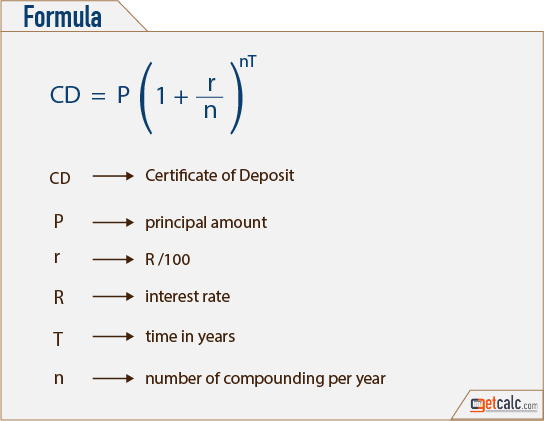
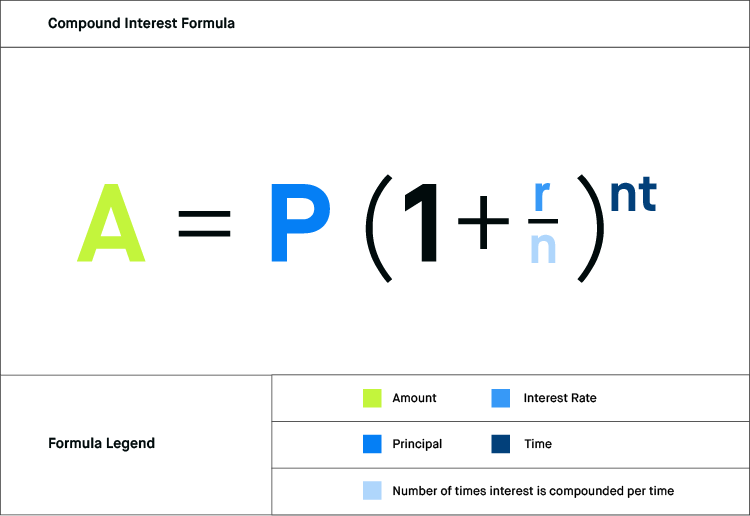
Here's a simple formula to calculate the future value of your CD:
FV = P * (1 + r/n)^(nt)
Where:
- FV is the future value of your CD (your initial deposit plus interest).
- P is your initial deposit (the principal).
- r is the annual interest rate (as a decimal).
- n is the number of times the interest is compounded per year.
- t is the time the CD is invested, in years.
Let's plug in some numbers! Say you've got a $10,000 CD with an APY of 3% that compounds monthly for 2 years. Here's how you'd calculate it:
FV = 10000 * (1 + 0.03/12)^(12*2) ≈ $10,616.78
 Cd Interest Rate Example at Jenny Mcnear blog
Not too shabby, huh? You've earned about $616.78 in interest!
Why Should You Care?
Now that you know how to calculate CD interest rates, you're probably wondering, "Why should I bother?" Well, my friend, knowing how to calculate interest rates can help you make smarter decisions about your money. You can compare CDs from different banks, figure out which one gives you the best return, and even decide if a CD is the right choice for you at all.
Plus, who knows? You might just become the life of the party at your next gathering when you start explaining how interest compounds. (Okay, maybe not. But still, it's a useful skill to have!)
Final Thoughts
So there you have it! Calculating CD interest rates isn't as scary as it seems. With a little bit of math and a whole lot of curiosity, you can unlock the secrets of those mysterious interest rates and make the most of your money.
Now go forth, young money-savvy hero, and conquer the world of CDs!
