How Do You Calculate Money Multiplier

Money Multiplier: The Magic Trick of Banking Ever wondered how banks seem to create money out of thin air? Like a magician pulling a rabbit from a hat, but with cash instead...
Money Multiplier: The Magic Trick of Banking
Ever wondered how banks seem to create money out of thin air? Like a magician pulling a rabbit from a hat, but with cash instead of fluffy critters. Well, buckle up, because we're about to dive into the world of the money multiplier, the banking equivalent of a magic trick.
So, What's the Deal with This Multiplier Thing?
The money multiplier is like the bank's secret sauce. It's a formula that shows how a small deposit can lead to a much larger amount of money being created. It's not some voodoo economics, though. It's all about trust, leverage, and a bit of math.
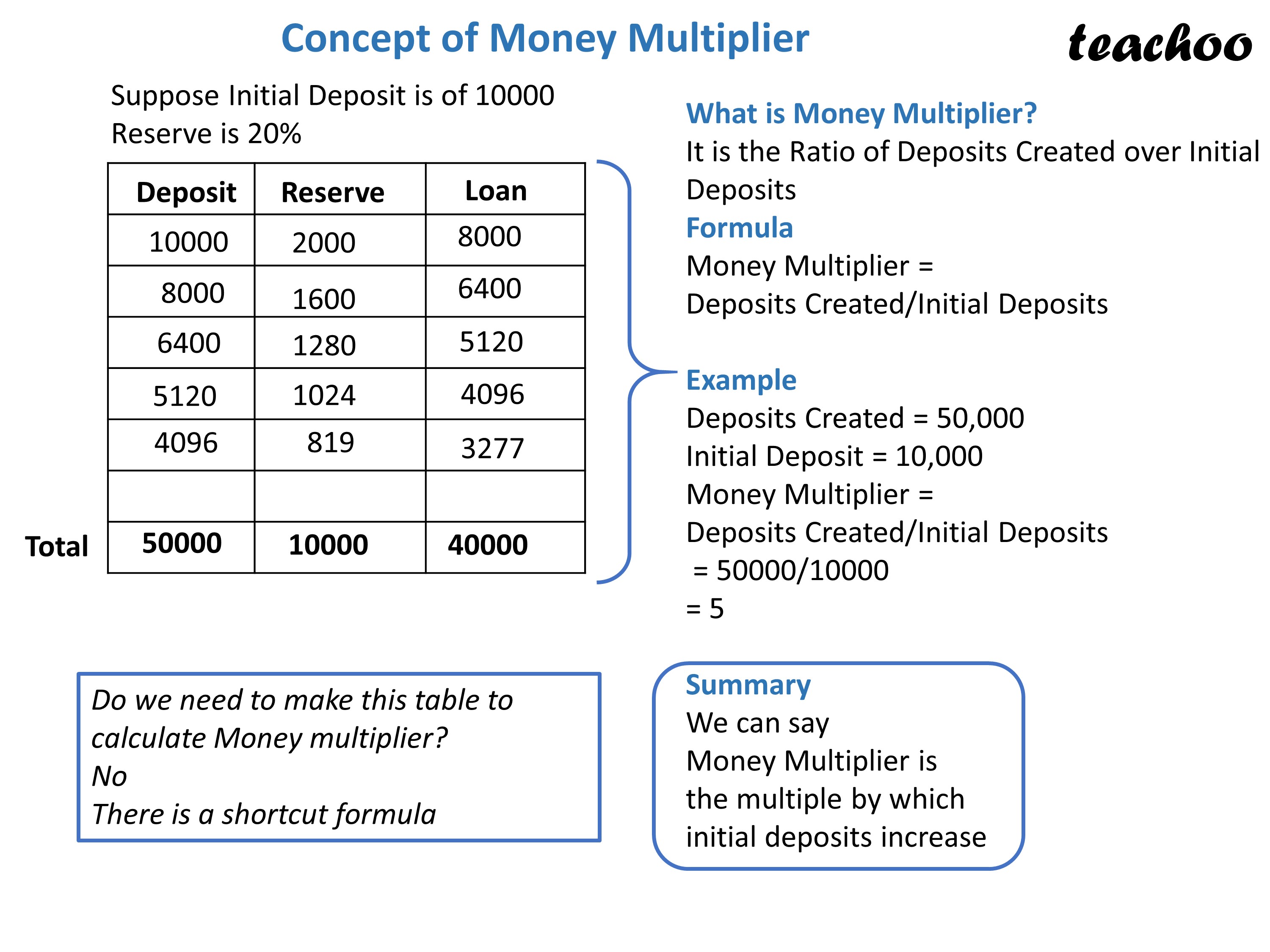
Imagine you deposit $100 into your local bank. Now, the bank doesn't just keep that $100 in a vault, waiting for you to withdraw it. No, no, no. That's not how banking works. Instead, they lend out a portion of that money to someone else.
Must Read
Lending with a Twist
Here's where it gets interesting. When the bank lends that money, the recipient deposits it back into the bank. And guess what? The bank can lend out a portion of that deposit too. And this process keeps happening over and over again.
It's like a chain reaction, but instead of atoms splitting, it's money multiplying. And that, my friend, is the money multiplier in action.
But How Much Does It Multiply?
The exact multiplier depends on something called the reserve ratio. That's the percentage of deposits a bank has to keep in reserve. In the U.S., for instance, it's 10%. So, if you deposit $100, the bank has to keep $10 on hand, but it can lend out the other $90.
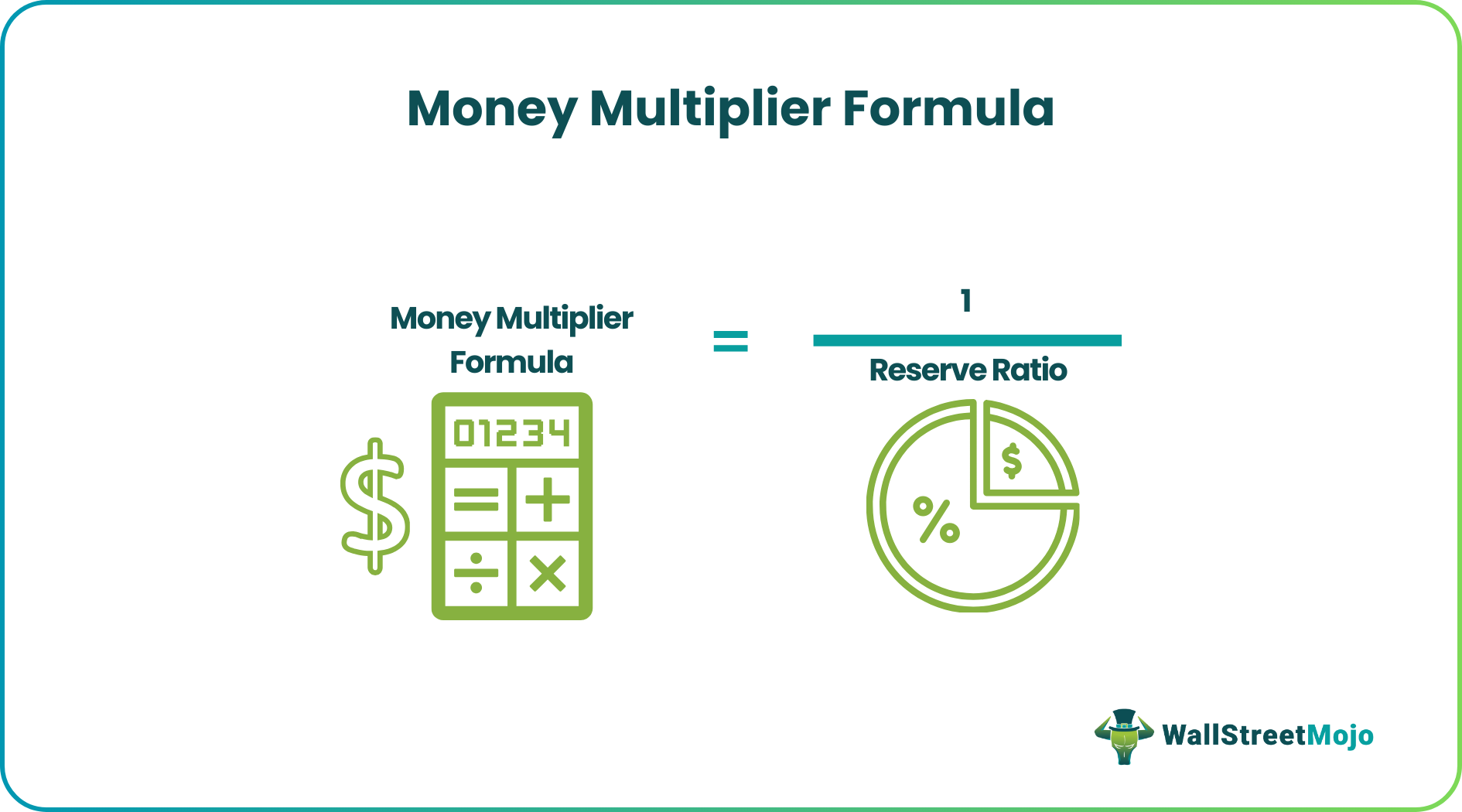 Money Multiplier Formula - Examples, How To Calculate?
Now, if the recipient deposits that $90 back into the bank, the bank can lend out $81 (90% of $90). And this continues until the money has been lent out and deposited back so many times that it's multiplied by a factor of about 10.
Money Multiplier in Action
Let's put this into real-world terms. If you deposit $100 into a bank with a 10% reserve ratio, that initial $100 can eventually lead to $1,000 in circulation. That's like turning one $100 bill into ten $100 bills. Magic, right?
But remember, this isn't some get-rich-quick scheme. The money multiplier is a tool that helps banks create credit and stimulate economic growth. It's a bit like the bank's superpower, allowing it to do more with less.
 PPT - Money and Banking Systems PowerPoint Presentation, free download
Why This Topic is Just Plain Fun
So, why should you care about the money multiplier? Well, for one, it's a fascinating example of how something as simple as a bank deposit can have a ripple effect on the entire economy. It's like a real-life game of telephone, but with cash instead of whispers.
Plus, it's a great conversation starter. Next time you're at a party, instead of talking about the weather, you can blow everyone's minds with your newfound knowledge of the money multiplier. Just don't be surprised if they start calling you 'Money Magician' from then on.
And hey, who knows? Understanding the money multiplier might just make you a bit more savvy with your own money. After all, knowledge is power, and understanding how banks work can help you make the most of your own deposits.
So, there you have it. The money multiplier: the banking world's best-kept secret. Now go forth and spread the word. And remember, the next time you make a deposit, you're not just putting money in the bank, you're starting a money-making chain reaction. How's that for a feel-good moment?
