How Do You Count Coloured Cells In Excel

Ever found yourself in a situation where you've got a colorful spreadsheet that's as vibrant as a box of crayons, and you're dying to know how many of each color there are? Yo...
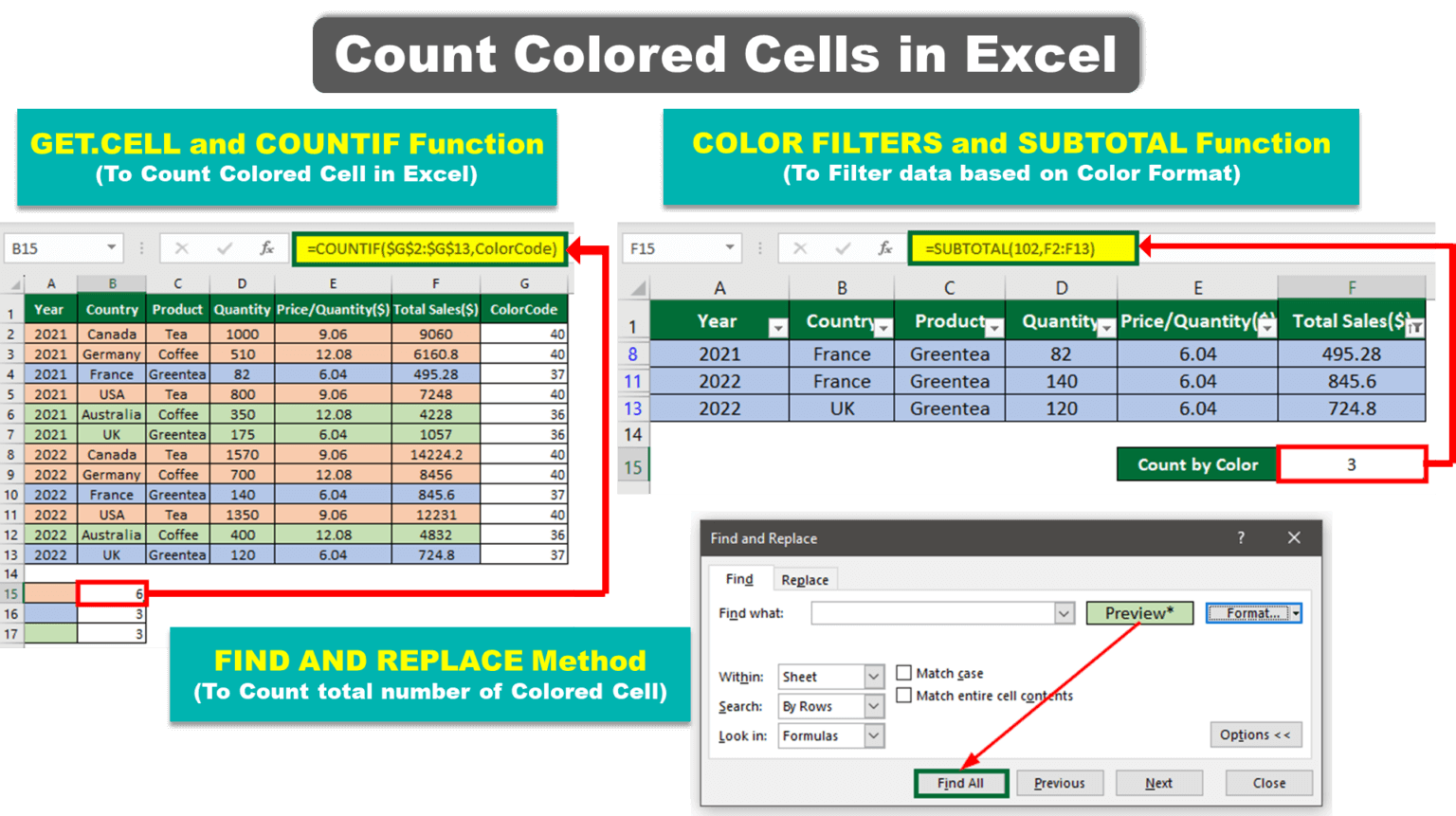
Ever found yourself in a situation where you've got a colorful spreadsheet that's as vibrant as a box of crayons, and you're dying to know how many of each color there are? You're not alone, my friend. Let's dive into the world of counting colored cells in Excel, and I promise, by the end of this, you'll be a pro, ready to tackle your colorful chaos.
Why Bother Counting Colored Cells?
You might be thinking, "Why on earth would I want to do that?" Well, let me paint you a picture. Imagine you're planning a party, and you've got a spreadsheet with all your guests' names, and they're color-coded based on their dietary preferences. Red for vegans, green for vegetarians, blue for pescatarians, and so on. Now, you wouldn't want to serve a plate of beef to a vegan, would you? That's where counting colored cells comes in. It helps you understand your data better, making your life easier and your parties more enjoyable.
Meet the COUNTIF Function
Alright, let's roll up our sleeves and get our hands dirty. The secret weapon in our arsenal is the COUNTIF function. It's like having a little helper elf who counts things for you. Here's the basic syntax: COUNTIF(range, criteria). The range is the area you want to count, and the criteria is what you're looking for.
Must Read
Let's say you've got a list of fruits in cells A1:A10, and you want to know how many apples there are. You'd use =COUNTIF(A1:A10, "apple"). Easy peasy, right?
Adding Color to the Mix
Now, let's add some color to the mix. Say you've colored the cells based on the fruit's sweetness - red for sour, green for sweet. You want to know how many sweet fruits there are. Here's where it gets a tad trickier, but don't worry, we'll take it step by step.
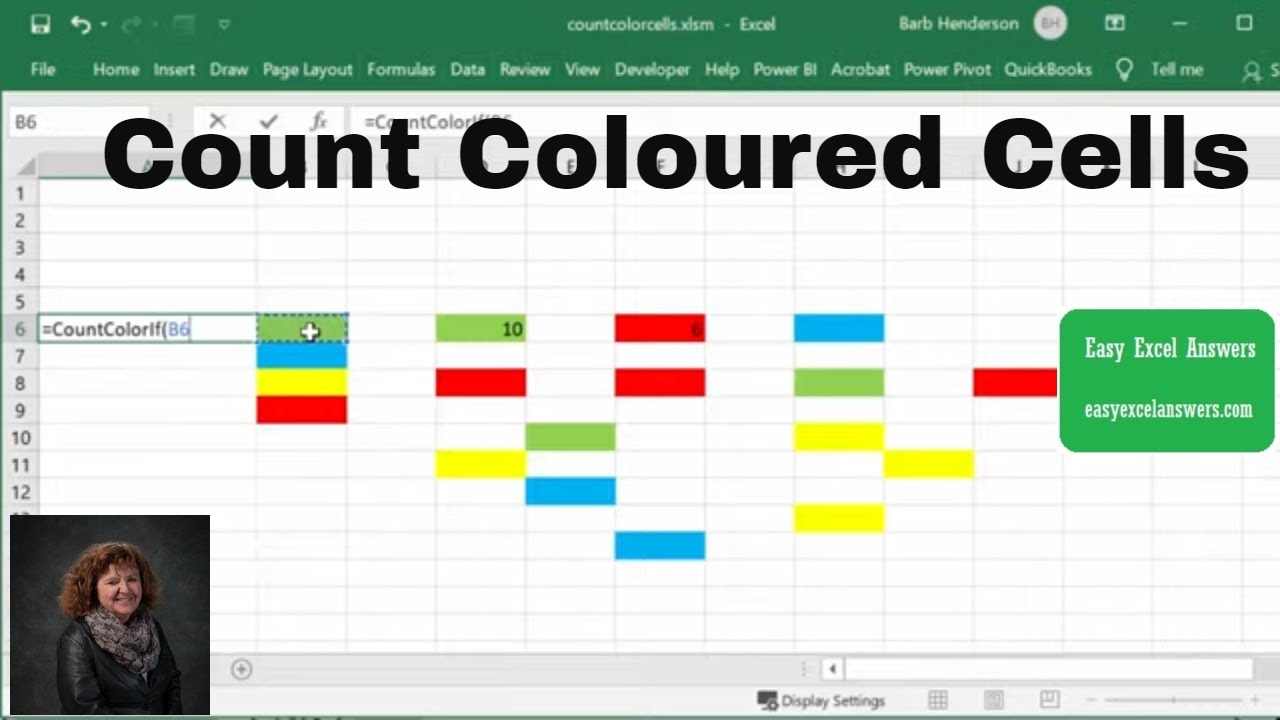 How To Count Color Cells In Excel - Infoupdate.org
First, you need to know the conditional formatting rule that's coloring your cells. Let's say you've used the rule "Format only cells that contain" and "are equal to" "sweet". Now, in our COUNTIF function, we'll use "is greater than or equal to" "sweet". Why? Because Excel uses numbers to represent text. "sweet" is 1, and "sour" is 0. So, "is greater than or equal to" "sweet" counts both "sweet" and "sour".
So, your formula would look like this: =COUNTIF(A1:A10, ">=" & 1). Pop that into a cell, and voila! You've got your count of sweet fruits.
Counting Multiple Colors
Now, what if you want to count both sweet and sour fruits? You could use the COUNTIF function twice and add the results together. But there's a neater way - the SUM and IF functions together. Here's how:
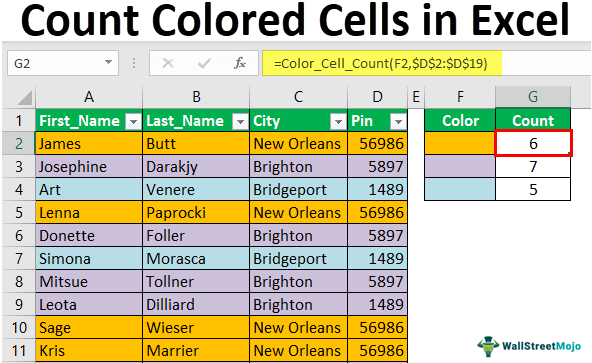 Count Colored Cells in Excel | Top 3 Methods (Step by Step Guide)
In a cell, type =SUM(IF(A1:A10, "sour", 0), IF(A1:A10, "sweet", 0)). This counts the number of "sour" and "sweet" fruits and adds them together. Magic!
Practice Makes Perfect
Don't worry if it doesn't click right away. Counting colored cells is a skill, and like any skill, it improves with practice. Grab a spreadsheet, color some cells, and experiment. You'll be a pro in no time.
And remember, counting colored cells isn't just about parties. It's about understanding your data better, making informed decisions, and maybe even impressing your colleagues with your newfound Excel skills. So, go forth, count those cells, and enjoy your colorful data adventures!
