How To Apply The Currency Format In Excel

Ever found yourself in a money-related pickle because you didn't quite grasp the currency format in Excel? I've been there, buddy. I mean, who hasn't accidentally spent a mill...
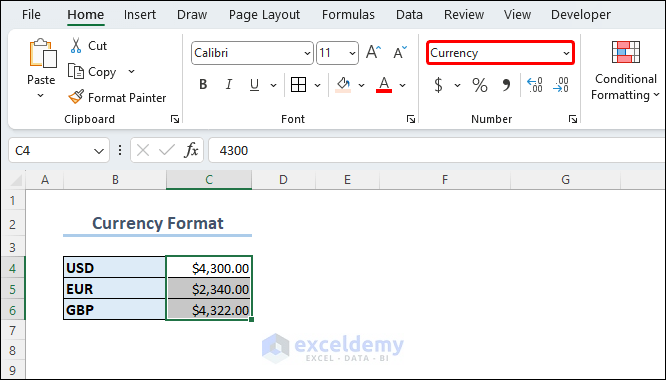
Ever found yourself in a money-related pickle because you didn't quite grasp the currency format in Excel? I've been there, buddy. I mean, who hasn't accidentally spent a million dollars in their imaginary Excel budget because they didn't know how to format those pesky numbers?
Why Bother with Currency Format?
Alright, let's talk about why you should care about this. Imagine you're planning a dream vacation. You've got your destinations, your activities, and you're trying to keep track of all the costs. You've got numbers flying everywhere, and it's starting to look like a scene from a math textbook. That's where currency format comes in. It's like having a little financial translator in your Excel sheet, making sure everything makes sense and stays organized.
Now, you might be thinking, "But I'm not a finance whiz, I just want to keep track of my expenses!" That's exactly why you need to know this. It's like learning to use a spatula to flip a pancake. You don't need to be a professional chef, but it sure makes the process a whole lot easier.
Must Read
Let's Get Started!
First things first, let's say you've got a cell with a number, and you want to turn it into a currency. You've got two main options here: the good old-fashioned way, and the quick and dirty way. Let's start with the quick and dirty.
The Quick and Dirty Way
This method is like using a drive-thru for your lunch. It's fast, it's easy, but it might not always give you the best results. Here's how you do it:
- Select the cell with the number you want to format.
- Right-click on the selected cell and choose "Format Cells" from the menu.
- In the "Number" tab, select "Currency" from the list of formats.
- Choose your currency symbol, and decide if you want to see cents (or whatever your smallest unit of currency is).
- Click "OK", and voila! Your number is now a shiny new currency.
But here's the thing, this method has a bit of a blind spot. It doesn't always recognize when you've got a negative number. So, if you've got a debt to track, it might not show up as negative. That's where our next method comes in.
 How To Format Numbers to Currency in Excel - YouTube
The Good Old-Fashioned Way
This method is like cooking at home. It takes a bit more time, but you've got more control over the final result. Here's how you do it:
- Select the cell with the number you want to format.
- Click on the "Home" tab in the ribbon at the top of your screen.
- Look for the "Number" group, and click on the "Comma Style" button. This will give you a list of number formats to choose from.
- Scroll down and select "Currency".
- Now, here's where it gets a bit different. In the "Number" group, you'll see a box that says "Format Cells". Click on that.
- In the "Number" tab, select "Currency" from the list of formats.
- Choose your currency symbol, and decide if you want to see cents.
- Here's the important part: look for the "Negative" box. Check it if you want your negative numbers to show up as, well, negative. Click "OK", and you're done!
See, wasn't that easy? Now you can keep track of your vacation expenses, your business budget, or even your weekly grocery spending without any nasty surprises.
But Wait, There's More!
You might be thinking, "This is all well and good, but what if I want to change the currency format for a whole bunch of cells at once?" Well, I'm glad you asked. Here's a little trick for that:
Let's say you've got a whole column of numbers, and you want to turn them all into currency at once. Here's how you do it:
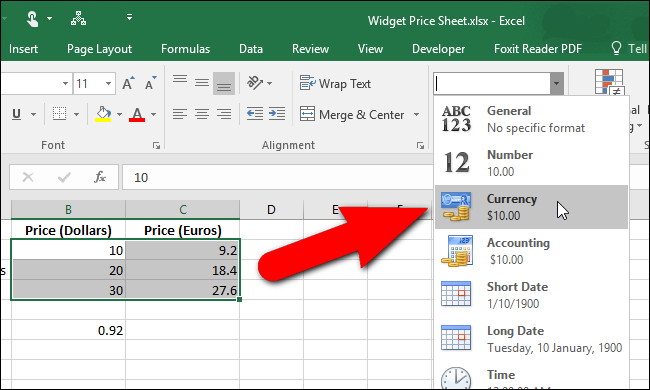 How to Change the Currency Symbol for Certain Cells in Excel
- Select the first cell in your column.
- Hover your mouse over the little square at the bottom right corner of the cell. Your cursor should turn into a plus sign.
- Click and drag down to select all the cells in your column.
- Now, follow the steps from the "Good Old-Fashioned Way" to format your cells.
And just like that, you've turned an entire column of numbers into a column of shiny new currencies. Isn't that neat?
Now Go Forth and Conquer!
So there you have it, folks. You're now a currency formatting pro. You can keep track of your money, whether it's for your business, your vacation, or your weekly shopping. You're ready to take on the world, one currency at a time.
And remember, just like learning to flip a pancake, practice makes perfect. So get out there and start formatting those numbers. Your future self will thank you.
Happy formatting, and until next time, keep those numbers in check!
