How To Connect Vcr To Smart Tv With Hdmi

So, you’ve got this old-school VCR sitting in your living room like a dusty relic from the ‘90s, and now you’re staring at your shiny new smart TV wondering, *"How do I even g...
So, you’ve got this old-school VCR sitting in your living room like a dusty relic from the ‘90s, and now you’re staring at your shiny new smart TV wondering, "How do I even get this thing to play on here?" No worries—you’re about to turn your VCR into a cool little media hub, and it’s easier than you think.
First off, let’s just say this: connecting a VCR to a smart TV isn’t some high-tech sci-fi mission. It’s more like teaching an old dog a new trick—just with way fewer treats and way more nostalgia. The key here is HDMI, that tiny but mighty port that’s basically the universal translator of modern tech. But here’s the thing—most VCRs don’t even have an HDMI port. So, how do we bridge the gap?
Step 1: Check Your VCR’s Output Options
Before you start pulling out cables like you’re unraveling a spiderweb, take a peek at the back of your VCR. You’ll likely see a few ports: Composite (yellow, red, white), S-Video, or maybe even Component. These are like the old-school dial-up of video connections—slow, but they get the job done.
Must Read
If your VCR has Composite (the rainbow-colored cables), you’re in luck. It’s the most common and easiest to work with. If it’s got S-Video or Component, those’ll give you better quality, but you might need a little extra gear. Think of it like upgrading from a flip phone to a smartphone—better, but not always necessary.
Why HDMI Matters (Even If Your VCR Doesn’t Have It)
HDMI is the gold standard for video connections today—it’s like the difference between a vinyl record and a streaming service. It carries both video and audio in one sleek cable, and it looks amazing on a smart TV. The problem? Your VCR was probably made before HDMI was even a twinkle in engineers’ eyes.
But don’t let that stop you. We’re about to turn your VCR into an HDMI-friendly sidekick with just a few simple tools. It’s like giving your old VHS tapes a makeover—they’ll still be the same, but now they’ll look way fancier.
Step 2: Grab the Right Adapter (Or Build Your Own)
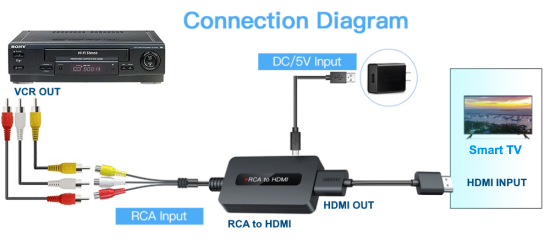
If your VCR has Composite outputs, you’ll need an AV-to-HDMI adapter. These little boxes are like the Swiss Army knives of home entertainment—they take your old-school signals and translate them into something your smart TV can understand.
You can find these adapters online for under $20, or if you’re feeling handy, you might even DIY one with a VGA-to-HDMI converter (though those are a bit trickier and usually require a power source). For most people, though, plug-and-play is the way to go. It’s like ordering pizza—you just want it to work without any extra hassle.
 Guide: How to Connect VCR to Samsung Smart TV Easily - Descriptive Audio
What If My VCR Has S-Video or Component?
If your VCR is fancy enough to have S-Video or Component outputs, you’re in for a treat. These connections are way cleaner than Composite, meaning your videos will look sharper and more detailed. It’s like upgrading from a black-and-white TV to color—suddenly, everything pops!
For S-Video, you’ll need an S-Video-to-HDMI converter. For Component, look for a Component-to-HDMI converter. Both are easy to find and usually plug right into your TV. Think of it as giving your VCR a spa day—it’s still the same old machine, but now it looks and sounds like it belongs in 2024.
Step 3: Plug and Play (Or Almost)
Once you’ve got your adapter, it’s time to connect the dots—literally. Plug one end of your VCR’s output cable into the adapter, and the other end of the adapter into your smart TV’s HDMI port. It’s like connecting two puzzle pieces, except one of them is a little more outdated.
Now, turn on your TV and switch to the HDMI input where you plugged in the adapter. If everything’s working, you should see your VCR’s menu or whatever you’ve got loaded up. If not, double-check your connections—sometimes those tiny cables can be a little stubborn.
Why This Is Actually Pretty Cool
Here’s the fun part: you’ve just turned your VCR into a mini media center. Now you can watch those old VHS tapes in all their HD glory, or even use it as a backup player for DVDs or Blu-rays. It’s like giving your TV a time machine—you can hop between the past and the present with just a few clicks.
 How to Connect a VCR to a Smart TV – Full Setup Guide with RCA, HDMI
Plus, there’s something weirdly satisfying about playing a VHS on a smart TV. It’s like watching a movie in a theater, but with the added drama of knowing your popcorn was probably made in the ‘80s. It’s nostalgia with a side of modern convenience.
Step 4: Optimize Your Setup (Because Why Not?)
If you want to take things a step further, you can add a few extra touches to make your VCR setup even smoother. For example, an HDMI switcher lets you connect multiple devices (like a gaming console or streaming stick) to the same HDMI port. It’s like having a personal assistant for your TV—except this one doesn’t complain about your snack choices.
You could also invest in a VHS-to-Digital converter if you’ve got tapes you want to preserve. It’s like making a backup copy of your favorite childhood memories—just in case the original gets lost in the shuffle. Plus, you’ll have a digital copy to share with friends who’ve never seen your family’s disastrous vacation tapes.
Final Thoughts: Embrace the Hybrid Life
At the end of the day, connecting your VCR to a smart TV isn’t just about making old tech work—it’s about blending the past and the present in a way that feels fresh. It’s like wearing a vintage band T-shirt with your favorite sneakers: it’s a little unexpected, but somehow, it just works.
So go ahead, give it a try. Pop in a tape, hit play, and enjoy the magic of watching something you recorded decades ago in all its HD splendor. It’s a small thing, but it’s one of those moments that makes you realize how cool it is to mix old and new. And hey, if it doesn’t work the first time? Well, that’s what troubleshooting is for—like debugging a glitchy video game, but with more nostalgia.
