How To Consolidate Worksheets In Excel

Hey there, Excel whizzes and wanna-be masters! Today, we're going to tackle a task that's as easy as pie and as rewarding as a perfect spreadsheet. We're talking about consoli...
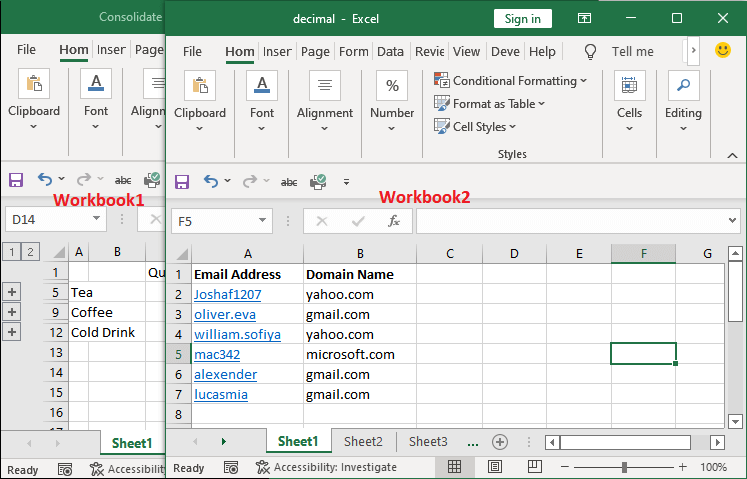
Hey there, Excel whizzes and wanna-be masters! Today, we're going to tackle a task that's as easy as pie and as rewarding as a perfect spreadsheet. We're talking about consolidating worksheets in Excel, and guess what? It's not as scary as it sounds. In fact, it's gonna be a blast!
Why Consolidate, You Ask?
Well, imagine you're a detective (because who doesn't love a good mystery?), and you've got a bunch of worksheets spread out like clues on your desk. Each one has a piece of the puzzle, but you need to put them all together to solve the case. That's where consolidating comes in. It's like your magic glue, sticking all those clues together in one neat, tidy place.
But wait, there's more! Consolidating worksheets isn't just about making your life easier (though, let's face it, that's a big plus). It's also about making your data more useful. When you consolidate, you're turning a bunch of scattered numbers into one powerful, insightful report. It's like giving your data superpowers!
Must Read
Let's Get Started!
Alright, enough chit-chat. Let's dive into the fun part. First things first, you need to decide what kind of consolidation you want. Are you after a simple sum, an average, or something more complex? Don't worry, Excel's got you covered with its trusty Consolidate feature.
Step 1: Prep Your Data
Before you start, make sure your data is ready. That means no empty cells, no merged cells, and no funky formatting. Think of it like cleaning your room before your mom comes over. You don't want any nasty surprises, right?
Step 2: Choose Your Function
Now, let's say you want to add up all the numbers in each of your worksheets. You'd choose the Sum function. But what if you want to find the average? No problem! Just pick the Average function instead. See how easy this is?
 Excel Consolidate Function | How to Consolidate Data in Excel?
And here's a little secret: you can even use more complex functions like Count, Max, or Min. The possibilities are endless!
Step 3: Consolidate, Baby!
Alright, now comes the fun part. Click on the cell where you want your consolidated data to appear. Then, click on the Data tab, find the Consolidate button, and click that bad boy. Voila! Your data is now one happy, united family.
But wait, there's more! You can even tell Excel to update your consolidated data automatically every time you change something in your worksheets. Isn't that just the coolest?
You Did It!
And there you have it! You've just consolidated your worksheets like a total pro. Isn't that a fantastic feeling? You've taken a bunch of scattered numbers and turned them into something useful, something powerful. You've given your data a voice, and it's singing your praises!
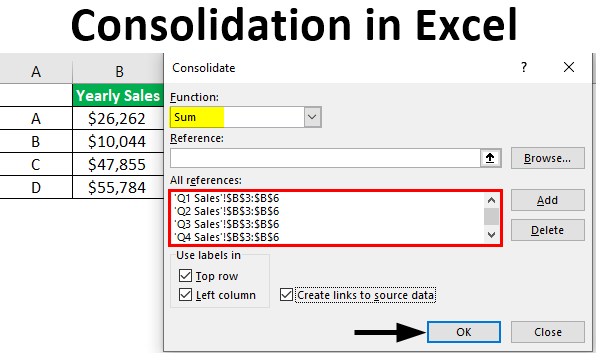 Consolidation in Excel | How to Consolidate Data in Multiple Worksheets?
So, what's next? Well, why not try consolidating with different functions? Or maybe you want to give that automatic update feature a whirl. The possibilities are endless, and each one is a step towards becoming an Excel rockstar.
Remember, learning new things is like a journey. It's not always smooth sailing, but every little victory makes it all worthwhile. So, keep exploring, keep learning, and most importantly, keep having fun!
And who knows? Maybe one day you'll look back on this article and think, "Wow, I've come a long way!" And that, my friend, is the best feeling in the world.
So, go on, get consolidating! Your data's waiting, and the world needs more Excel heroes. You've got this!
