How To Get The Hypotenuse Of A Triangle

Hey there, let's talk triangles! You know those shapes we all learned about in school? Yep, triangles! They're not just for kids' coloring books or math tests. They're actuall...
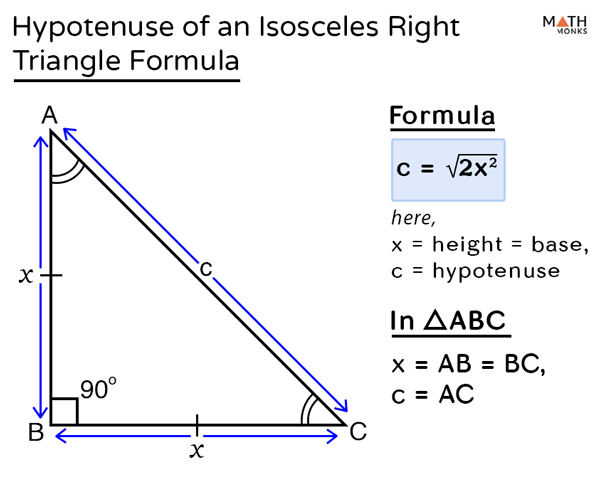
Hey there, let's talk triangles!
You know those shapes we all learned about in school? Yep, triangles! They're not just for kids' coloring books or math tests. They're actually pretty cool, and one of the neatest things about them is finding the length of their sides. Today, we're going to chat about how to find the hypotenuse of a triangle. Sound fun? Let's dive in!
First things first, what's a hypotenuse?
Imagine a triangle as a slice of pizza. The hypotenuse is the longest side, just like the crust that holds all the yummy toppings together. In a right-angled triangle (that's a triangle with a 90-degree angle, like a corner in your room), the hypotenuse is the side opposite the right angle. Easy peasy, right?
Now, let's get our hands dirty with the Pythagorean theorem
You might have heard of this guy, Pythagoras. He was a smart cookie who figured out a special rule for right-angled triangles. It's like a secret code that helps us find the length of the hypotenuse. The theorem goes like this:
Must Read
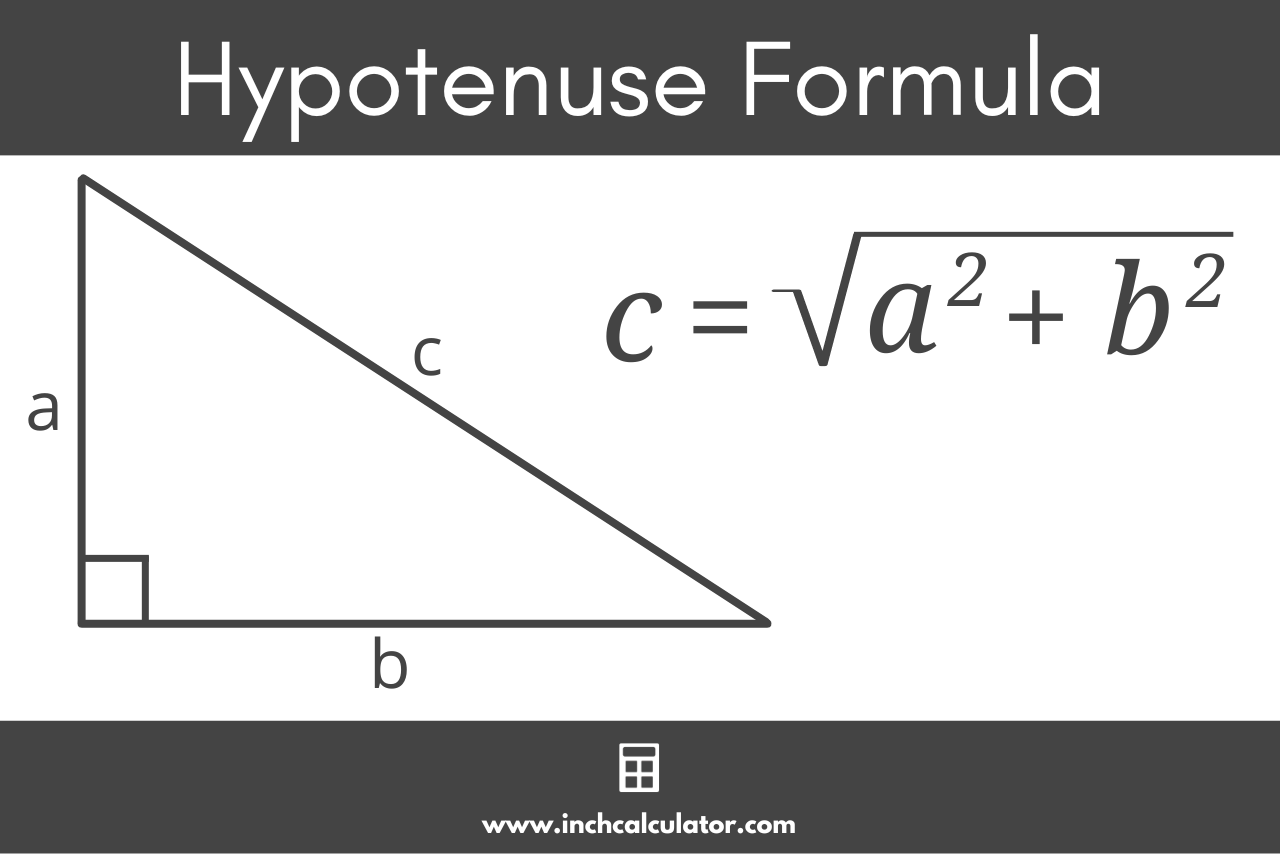
a² + b² = c²
Where 'a' and 'b' are the two shorter sides (the legs), and 'c' is the hypotenuse. It's like a magical equation that turns numbers into the perfect triangle!
Let's give it a try!
Say we have a right-angled triangle, and we know one leg is 3 units long and the other leg is 4 units long. We want to find the length of the hypotenuse, 'c'.
First, we square the lengths of the legs:
3² = 9 and 4² = 16
 3 Easy Ways to Find the Length of the Hypotenuse - wikiHow
Then, we add those together:
9 + 16 = 25
Now, we take the square root of that sum to find 'c':
√25 = 5
So, the hypotenuse is 5 units long! Isn't that neat?
 Pythagoras - Finding the hypotenuse | Teaching Resources
But what if we only know the hypotenuse and one leg?
No worries! We can still find the other leg using the same theorem. Let's say we know the hypotenuse is 5 units long and one leg is 3 units long. We want to find the length of the other leg, 'b'.
We'll rearrange the theorem to solve for 'b':
b² = c² - a²
Plug in the values we know:
b² = 5² - 3² and b² = 25 - 9
 Calculating The Hypotenuse – Hypotenuse of a Triangle – FYVISM
b² = 16
Then, take the square root:
b = √16 and b = 4
There you have it! The other leg is 4 units long.
Why does this even matter?
You might be thinking, "Who cares about the length of a triangle's sides?" Well, this stuff is used all the time in the real world! Architects use it to design buildings, engineers use it to build bridges, and even your favorite video game developers use it to create realistic graphics. Plus, it's just plain cool to understand how things work, right?
So, are you ready to be a triangle whisperer?
Now that you know how to find the hypotenuse, you can impress your friends with your newfound knowledge. Next time you see a right-angled triangle, give it a try! And remember, triangles aren't just for math class – they're everywhere, and they're pretty darn awesome.
