How To Introduce A Character In A Script

So, there I was, sitting in a bustling coffee shop, eavesdropping on a couple of writers brainstorming their new script. One of them was struggling, big time, with introducing...

So, there I was, sitting in a bustling coffee shop, eavesdropping on a couple of writers brainstorming their new script. One of them was struggling, big time, with introducing a new character. "How do I make this guy interesting?" they groaned. It got me thinking, "Well, that's a great question!" And here we are, diving into the fun world of character introductions.
First Impressions Matter
You know how they say you only get one chance to make a first impression? That's exactly what we're talking about here. Your character's intro is their chance to strut their stuff, grab the audience's attention, and make them want to stick around. So, how do you make that happen?
Show, Don't Tell
Alright, let's start with the basics. You've probably heard this a million times, but it's worth repeating: show, don't tell. Instead of saying "John was a grumpy old man," show us John kicking a puppy (metaphorically, of course) and muttering about "damn kids these days."
Must Read
Here's a quick example:
INT. COFFEE SHOP - DAY
A man in his 60s, JOHN, sits alone, scowling at the barista who's trying to chat him up.
BARISTA: (cheerfully) You new here, John?
JOHN: (grumbles) Just pour the coffee, kid.
BARISTA: (laughs) Alright, grumpy.
See how we didn't just say "John was grumpy"? We showed it through his actions and words.
Give Them a Hook
Now, you've shown your character, but how do you make them interesting? You give them a hook. This could be a unique quirk, a mysterious past, or a compelling goal. It's something that makes the audience go, "Ooh, what's that about?"
Let's give John a hook:
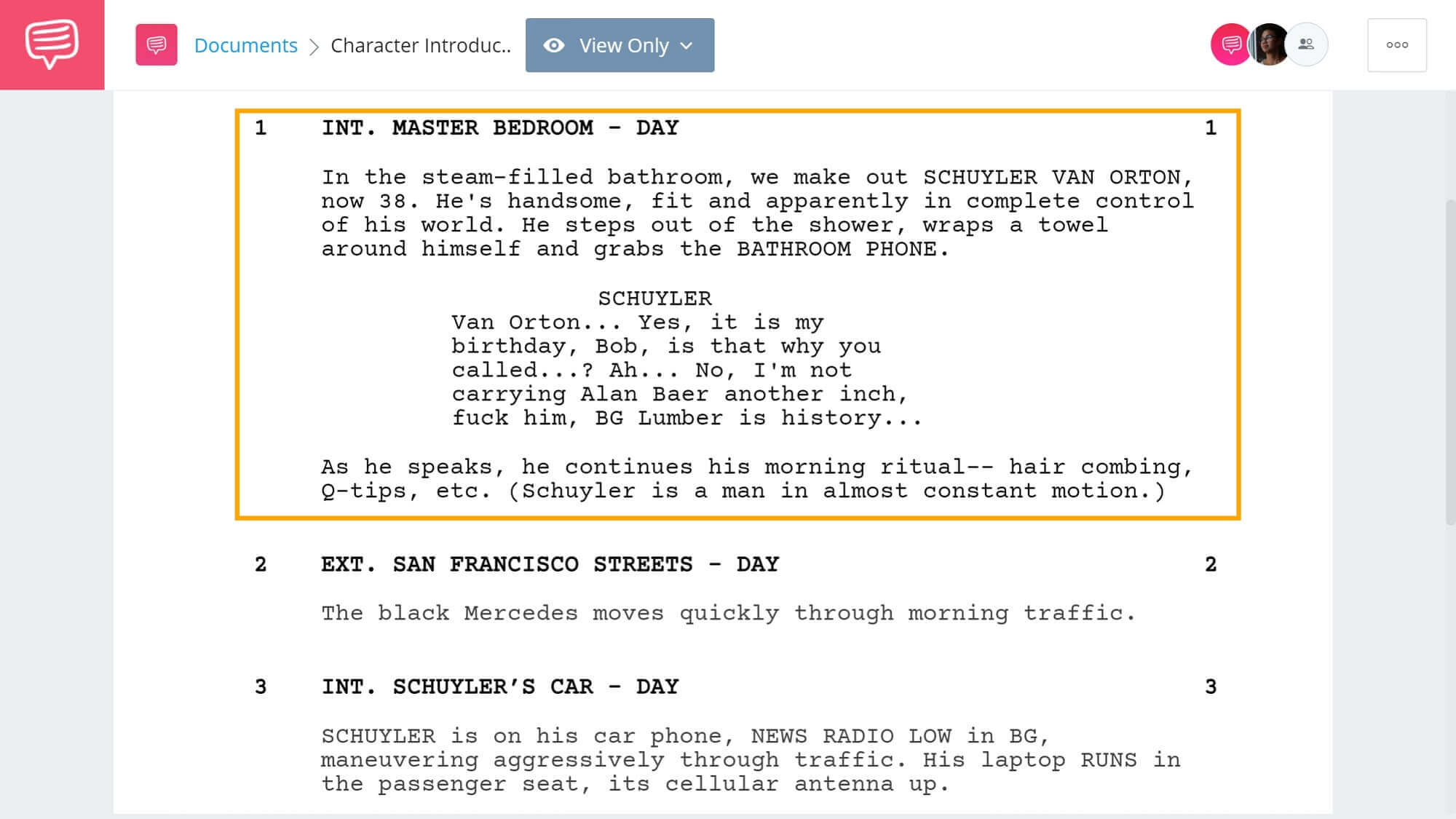 How to Introduce Characters in a Screenplay: Character Descriptions Tips
INT. COFFEE SHOP - DAY
JOHN: (looking at his watch, anxious) Damn it, where is she?
BARISTA: (curious) Waiting for someone, John?
JOHN: (sighs) My granddaughter. She's... special.
BARISTA: (smiles) In what way?
JOHN: (pauses, then leans in) She can talk to ghosts.
Now we've got a hook! John's granddaughter has a unique ability, and John's protective, maybe even secretive, about it. The audience is going to want to know more.
Timing is Everything
So, you've shown your character and given them a hook. Great! But when do you introduce them? The answer is: it depends. It depends on the story, the genre, and the mood you want to set.
In some stories, you might want to introduce your character right away, to grab the audience's attention from the get-go. In others, you might want to hold off, build some tension or mystery first. It's all about what works best for your story.
Less is Sometimes More
Remember, you don't have to reveal everything about your character right away. In fact, it's often better if you don't. Leave some things to the imagination, or to be revealed later. This can create intrigue and keep the audience engaged.
 How to Introduce Characters in a Screenplay [5 Tips for Writers!]
Let's go back to John. We've shown he's grumpy and given him a hook, but we haven't revealed anything about his past, his job, or even his favorite coffee. Leave some things to the audience's imagination, and they'll fill in the blanks with their own ideas.
Practice Makes Perfect
Alright, so you've got the basics down. Now it's time to practice. Try writing a few different character introductions. Make one where the character is introduced in a big, dramatic scene. Make another where they're introduced in a quiet, everyday moment. See what works, what doesn't, and why.
And remember, there's no one "right" way to introduce a character. It's all about what works for your story and your audience. So, have fun with it! After all, introducing a character is like throwing a party. You want your guests (the audience) to have a great time and remember the new kid (your character) for a long time.
Now, go forth and introduce some amazing characters! I'll be here, sipping my coffee and eavesdropping on your brilliant ideas.
