How To Program A Body Control Module

Alright, gather 'round, folks. Today, we're going to tackle a topic that's as fascinating as it is futuristic. We're talking about programming a Body Control Module, or BCM fo...
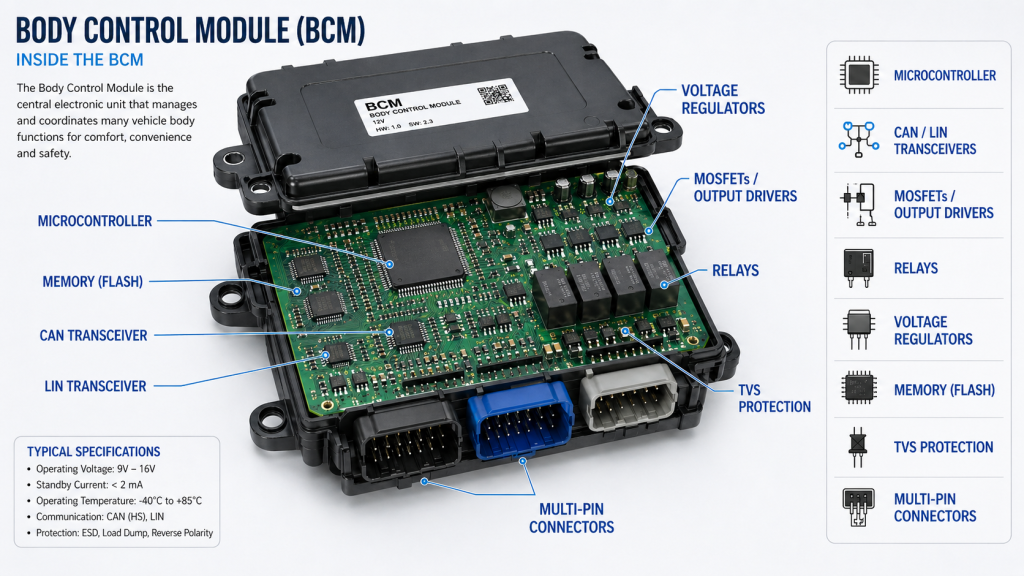
Alright, gather 'round, folks. Today, we're going to tackle a topic that's as fascinating as it is futuristic. We're talking about programming a Body Control Module, or BCM for short. Now, don't go imagining we're about to turn you into a human robot (though, wouldn't that be something?). No, we're talking about the BCM in your car. You know, the little brain that controls all the nifty features that make your ride more than just four wheels and an engine.
First Things First: What's a BCM?
Imagine the BCM as the conductor of your car's orchestra. It's the brain that tells your windows to roll down when you hit that button, or your locks to click into place when you press the 'lock' button on your key fob. It's the mastermind behind your car's fancy features, and it's all thanks to this little computer that's tucked away in your vehicle.
Now, you might be thinking, "Why on earth would I want to program this thing?" Well, my friend, there are a multitude of reasons. Maybe you want to make your car's interior lighting dance like a disco ball every time you start your engine. Or perhaps you've always dreamed of having your car honk the tune of "Happy Birthday" when you press the horn. The possibilities are as endless as they are entertaining.
Must Read
Before You Start: A Word of Caution
Now, before you grab your soldering iron and start tinkering, let me put on my serious hat for a moment. Messing with your car's BCM can be a bit like playing with fire. One wrong move, and you could end up with a car that's as useful as a chocolate teapot. So, if you're not comfortable with a bit of DIY, it might be best to leave this one to the professionals.
But, if you're feeling brave (or perhaps a little bit crazy), then let's dive in. Here's what you'll need:
- A BCM programming tool. These can range from simple, affordable options to high-end, professional-grade tools.
- A laptop or computer. You'll need this to run the programming software.
- Patience. Lots and lots of patience.
Step 1: Locate Your BCM
First things first, you need to find your BCM. It's usually tucked away under the dashboard, but the exact location can vary depending on your make and model of car. Consult your vehicle's manual (you do have it, right?) or do a quick search online to find out where it's hiding.
Once you've found it, don't be tempted to start poking around. The BCM is a delicate little thing, and it doesn't take kindly to being prodded by untrained fingers. So, grab your programming tool and let's get started.
Step 2: Connect Your Tool
Connecting your programming tool to the BCM is a bit like connecting a USB drive to your computer. There's usually a specific port on the BCM that the tool slots into. Once it's connected, turn on your car's ignition. The BCM should now be ready to receive its new programming.
 Body Control Module | Understanding BCM in Modern Vehicles
Now, here's where things get a bit tricky. You see, every car manufacturer has their own programming language for their BCMs. It's like they're all speaking different dialects of the same language. So, you'll need to find the right software for your car's make and model.
Some software is free, some isn't. Some is easy to use, some is... well, let's just say it's an acquired taste. But don't worry, with a bit of googling, you should be able to find something that suits your needs (and your budget).
Step 3: Start Programming
Alright, now comes the fun part. Fire up your programming software, and you should see a list of all the features that you can program. It's like being a kid in a candy store, except instead of candy, you're playing with your car's features.
Let's say you want to program your car's interior lights to flash like a rave when you unlock the doors. You'd select 'Interior Lights' in the software, then choose 'Unlock' from the list of triggers. Then, you'd select 'Flash' from the list of actions. Easy, right?
Well, maybe not that easy. Remember, we mentioned that each manufacturer has their own language? Yeah, that can make things a bit confusing. But don't worry, most software comes with a help function. And if all else fails, there are plenty of forums and communities dedicated to BCM programming. Someone out there will know the answer to your question.
 Body Control Module | Understanding BCM in Modern Vehicles
Step 4: Save Your Work
Once you've programmed all the features you want, it's time to save your work. This is where things can get a bit... dramatic. You see, saving your work to the BCM is a bit like uploading a new operating system to a computer. If something goes wrong, your car could end up as useful as a chocolate teapot.
So, take a deep breath, cross your fingers, and hit 'save'. If everything goes well, your car should reboot, and your new programs should be ready to go. If not... well, it's probably time to call a professional.
And That's How You Program a BCM!
And there you have it, folks. You're now officially a BCM programming pro. Or, at least, you will be once you've successfully programmed your car's features. Remember, patience is key. It might take a few tries to get everything just right, but the end result is totally worth it.
So, go forth, and make your car as unique as you are. Just remember to keep it road legal. The last thing we need is a car that honks the tune of "Never Gonna Give You Up" while driving down the highway.
Happy programming!
