How To Use Calculated Field In Pivot Table

Alright, gather 'round, folks. I've got a tale to tell you about a magical tool that'll make your data dance like there's no tomorrow. We're talking about Calculated Fields in...
Alright, gather 'round, folks. I've got a tale to tell you about a magical tool that'll make your data dance like there's no tomorrow. We're talking about Calculated Fields in Pivot Tables. Now, don't go rolling your eyes, thinking this is gonna be as dry as a desert. I promise, by the end of this, you'll be chomping at the bit to get your hands on some data and start crunching numbers.
What's a Calculated Field, You Ask?
Imagine you're at a buffet - yes, yes, I know, it's a stretch, but bear with me. You've got your plates of data, and you're trying to make sense of it all. A Calculated Field is like your secret weapon, the culinary genius who whips up something amazing from all those seemingly random ingredients.
In simpler terms, a Calculated Field is a custom formula you create in a Pivot Table to perform calculations on your data. It's like giving your data a little nudge and saying, "Hey, you two, add up and make something useful out of yourselves!"
Must Read
Why Bother with Calculated Fields?
Let's say you're running a business, and you've got sales data coming out of your ears. You want to know your total sales, sure, but you also want to know your profit margin, your sales growth, your... well, you get the picture. That's where Calculated Fields come in. They're like your personal data butler, serving up exactly what you need.
Plus, they're a great way to impress your colleagues. "Oh, you want to know our average sales per region? Hold my coffee." whips out Calculated Field "Voila!"
Alright, Alright, How Do I Do It?
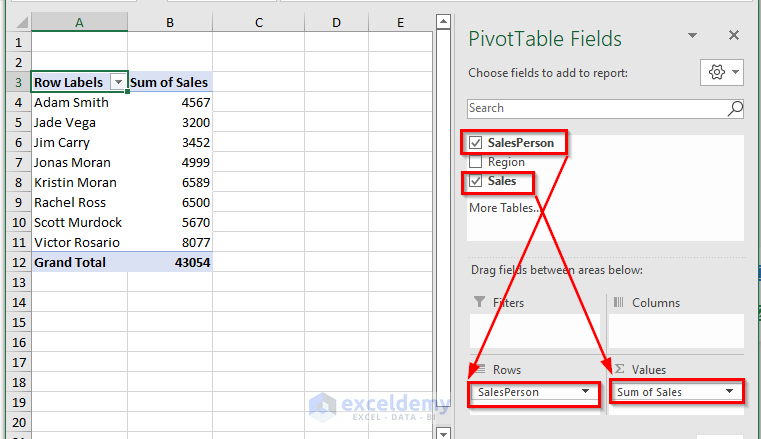
First things first, you need to have some data in your Pivot Table. If you don't, well, this is gonna be a short story. So, let's assume you've got your data all set up and ready to go.
Step 1: Right-Click Your Way to Victory
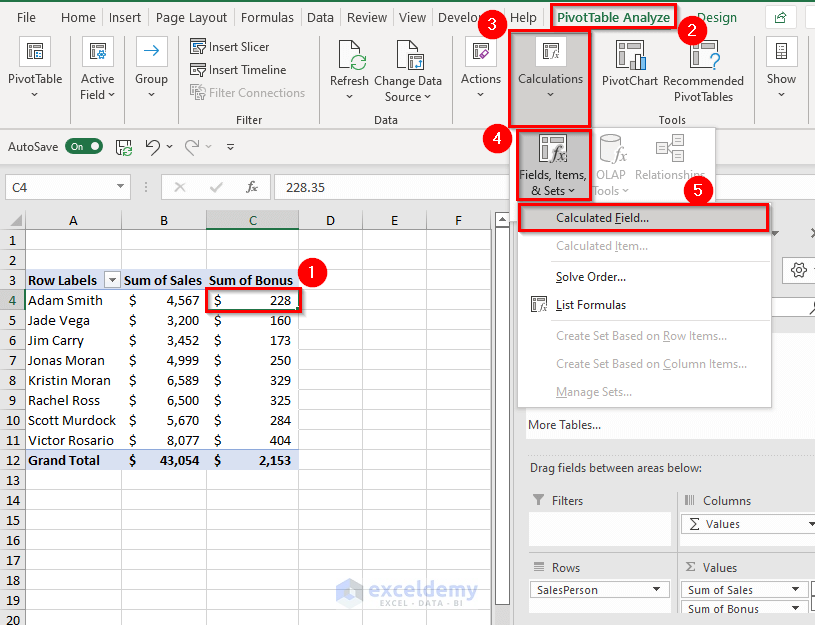
Right-click anywhere in the Pivot Table area, and click on "Calculated Field". It's like ordering a secret menu item at a restaurant. You know it's there, but you've got to know how to ask for it.
 How to Use Calculated Field in Excel Pivot Table (8 Ways) - ExcelDemy
Step 2: Name Your Creation
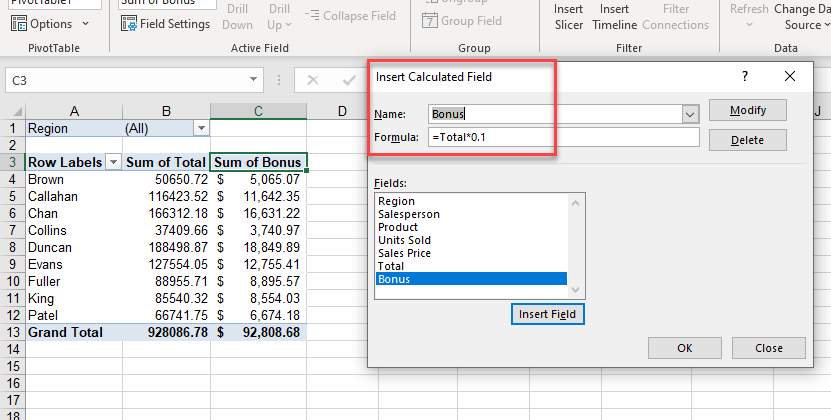
Give your new field a name. Make it something memorable, like "ProfitMargin" or "SalesGrowth". You can't go wrong with something descriptive. Just remember, no special characters or spaces. This isn't a game of hangman.
Step 3: Let's Get Calculating
Now, here's where the magic happens. In the "Formula" box, you're going to type in your formula. Let's say you want to calculate profit margin. You'd type something like: `=Sales/Total Cost`. Simple, right?
But wait, there's more! You can use functions too. Want to find the average sales per region? Use the `AVERAGE` function. Want to know the total sales? Use `SUM`. It's like having a whole toolbox at your disposal.
Step 4: Test It Out
Before you hit "OK", make sure to test your formula. There's nothing worse than creating a field only to find out it's been calculating your data all wrong. Click on "Test" and make sure it's doing what you want it to.
 Add a Calculated Field in a Pivot Table in Excel & Google Sheets
Step 5: Let the Games Begin
Once you're happy with your formula, hit "OK". Your new field will appear in the Pivot Table field list, ready for you to drag and drop into your table. And just like that, you've created a new field from scratch. You're a data alchemist now!
But Wait, There's More!
Calculated Fields aren't just for numbers, folks. You can use them with text too. Want to create a field that combines two text fields? You can do that. Want to create a field that displays a message based on certain conditions? You can do that too. The possibilities are endless.
And the best part? Once you've created a Calculated Field, you can use it again and again. It's like having your own personal data chef, ready to whip up whatever you need at a moment's notice.
So, What Are You Waiting For?
Go forth, data adventurers! Get out there and start creating your own Calculated Fields. Remember, practice makes perfect, so don't be afraid to experiment. And who knows? You might just find that your data has a hidden talent for stand-up comedy. (Okay, maybe not that last part.)
Happy calculating!
