How To Write Subtraction Formula In Excel

Ever found yourself in a spreadsheet showdown, wishing you could subtract like a pro without pulling your hair out? Well, friend, you're in luck! Today, we're going to dive in...
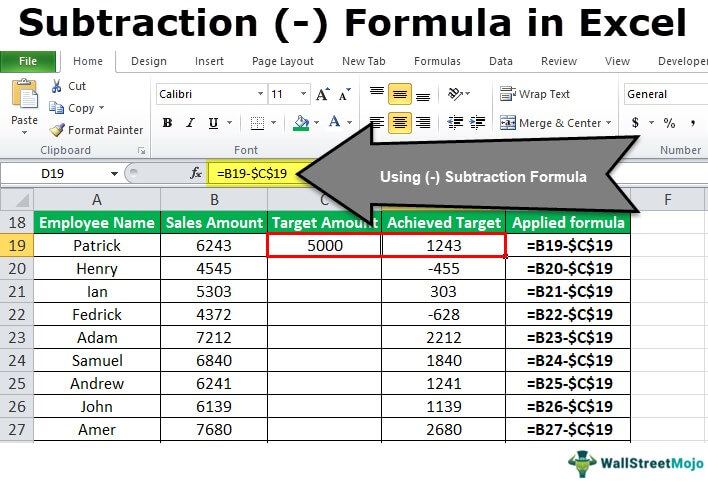
Ever found yourself in a spreadsheet showdown, wishing you could subtract like a pro without pulling your hair out? Well, friend, you're in luck! Today, we're going to dive into the wonderful world of Excel subtraction, and let me tell you, it's as easy as pie. So, grab your favorite snack, and let's get this party started!
Why Subtract in Excel?
You might be thinking, "Why should I care about subtracting in Excel? I've got a calculator for that." And while that's true, learning to subtract in Excel can unlock a whole new level of spreadsheet sorcery. Imagine subtracting entire columns of numbers with a single click, or automating your calculations so they update in real-time. Sounds pretty nifty, huh?
Meet the Subtraction Formula
Alright, enough chit-chat. Let's talk about the star of the show: the subtraction formula. In Excel, we use the humble minus sign (-) to subtract one value from another. But here's the thing, you can't just type - and expect magic to happen. You've got to give Excel some context, and that's where cell references come in.
Must Read
Let's say you've got two columns of numbers, A and B, and you want to subtract B from A. You'd type the following formula into a cell where you want the result to appear:
=A1-B1
See what we did there? We told Excel to look at the value in cell A1, subtract the value in cell B1, and plop the result into the cell where we typed the formula. Easy peasy, lemon squeezy!
Subtracting Rows and Columns
Now, you might be wondering, "What if I want to subtract an entire column or row?" Well, my curious friend, that's where things get really interesting. Instead of typing out each cell reference, you can use a simple trick to subtract whole columns or rows at once.
Let's say you've got a range of cells in column A (A1:A10) and you want to subtract the values in column B (B1:B10). You'd type the following formula into a cell where you want the result to appear:
=A1:A10-B1:B10
Voilà! Excel will subtract each corresponding pair of cells in columns A and B, and you'll get a whole range of results with just one formula. Isn't that something?
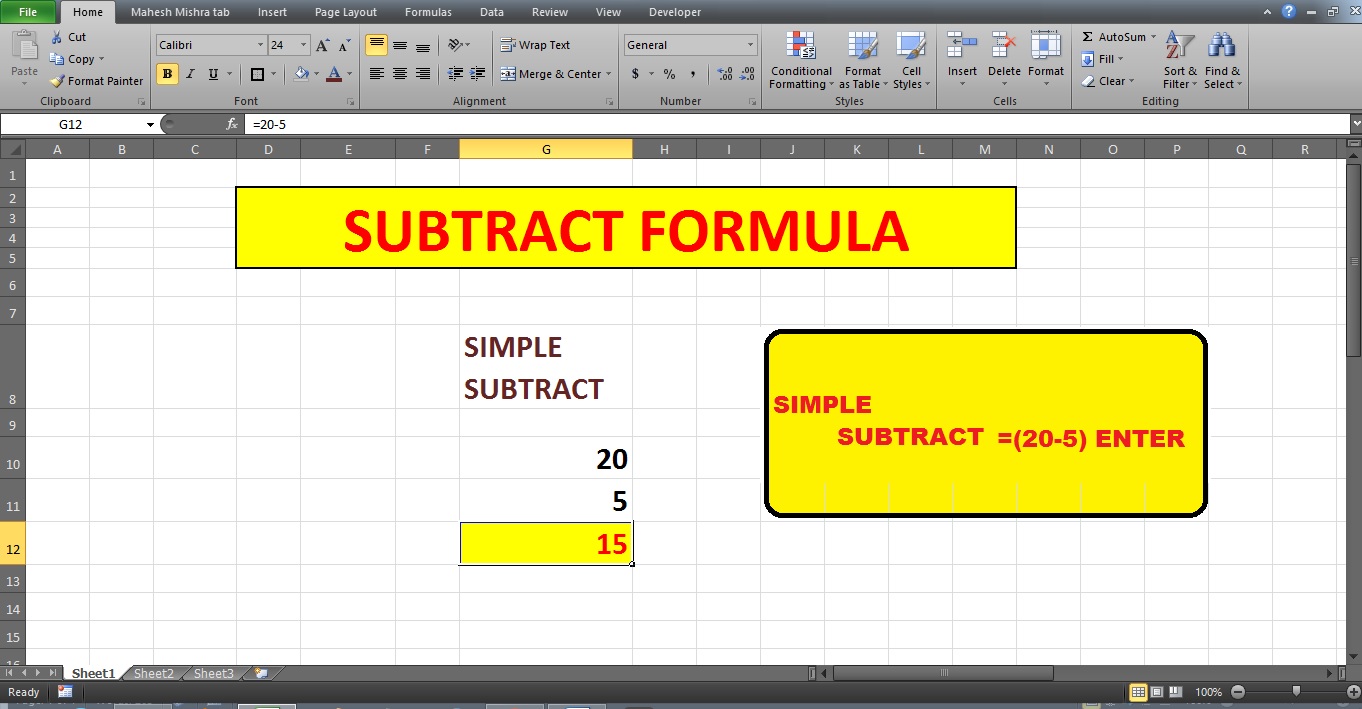 How To Make Numbers Subtract In Excel - Free Printable Worksheet
Automatic Updates: The Secret Weapon
But wait, there's more! The best part about using formulas in Excel is that your results will update automatically whenever you change the values in your original cells. So, if you adjust the numbers in columns A and B, your subtraction results will update in real-time. It's like having a little spreadsheet elf working tirelessly to keep your calculations up-to-date. How cool is that?
Subtracting with Functions
Alright, let's kick things up a notch. So far, we've been using the basic subtraction formula, but Excel also has some built-in functions that can help you subtract with even more ease. The SUM function, for example, can add up a range of cells, and if you stick a minus sign in front of it, it'll subtract that range from another value. Confused? Don't be! Let me explain.
Let's say you've got a range of cells in column A (A1:A10) that you want to subtract from a single value, like 100. You'd type the following formula into a cell where you want the result to appear:
=100-SUM(A1:A10)
See what we did there? We told Excel to add up all the values in column A, then subtract that sum from 100. Neat, huh?
Subtracting with Multiple Ranges
But what if you want to subtract multiple ranges of cells? No problem! You can use the SUM function multiple times, or you can use the SUMPRODUCT function, which is specifically designed to add or subtract multiple ranges of cells. Here's how you'd subtract two ranges of cells (A1:A10 and B1:B10) from a single value (100) using SUMPRODUCT:
=100-SUMPRODUCT(A1:A10,B1:B10)
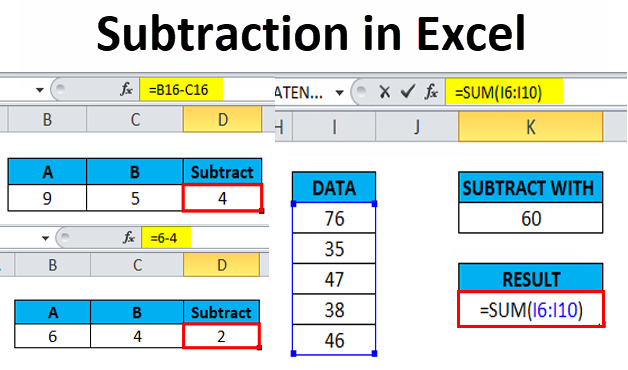 How To Do A Formula In Excel For Subtraction - Design Talk
Easy as pie, right?
Subtracting with Conditional Logic
Now, let's get a little fancy. What if you want to subtract one value from another, but only if a certain condition is met? That's where the IF function comes in. The IF function lets you perform one action if a condition is true, and another action if it's false. Here's how you can use it to subtract with conditional logic:
=IF(A1>B1, A1-B1, "No subtraction")
In this example, Excel will subtract the value in cell B1 from the value in cell A1 only if the value in A1 is greater than the value in B1. If the condition is not met, Excel will display the text "No subtraction" instead. Isn't that something?
Subtracting with Lookups
Finally, let's talk about lookups. Sometimes, you might want to subtract a value from another value, but you're not sure where that other value is located in your spreadsheet. That's where the VLOOKUP and XLOOKUP functions come in. These functions let you search for a value in one range of cells, and then retrieve a corresponding value from another range of cells. Here's how you can use them to subtract with lookups:
=A1-XLOOKUP(A1, B1:B10, C1:C10)
In this example, Excel will search for the value in cell A1 within the range B1:B10. If it finds a match, it will subtract the corresponding value from the range C1:C10. If it doesn't find a match, it will return an error. Pretty nifty, huh?
Wrapping Up
And there you have it, folks! You're now a subtraction superhero, ready to tackle any spreadsheet challenge that comes your way. Whether you're subtracting entire columns, automating calculations, or using conditional logic and lookups, you've got the power of Excel at your fingertips. So go forth, subtract with abandon, and remember: with great subtraction comes great responsibility. Happy calculating!
