John F Kennedy Us History Definition

Picture this: It’s 1961, and the world is basically a giant game of Risk where the stakes are human lives, Cold War tensions, and whether or not someone will invent the selfie...

Picture this: It’s 1961, and the world is basically a giant game of Risk where the stakes are human lives, Cold War tensions, and whether or not someone will invent the selfie stick (spoiler: they won’t). Enter John F. Kennedy, the 35th U.S. president—a guy who looked like he belonged in a Mad Men episode, had a voice that could sell ice to an Eskimo, and somehow convinced America that space travel wasn’t just a pipe dream.
If you’ve ever wondered why JFK is such a big deal in U.S. history, buckle up. This isn’t just some random guy who happened to be president during a cool decade (though, let’s be honest, the ‘60s were that cool). Kennedy was the kind of leader who turned the country’s attention skyward—literally—while also dealing with very earthy problems like the Cuban Missile Crisis, civil rights, and making sure the U.S. didn’t turn into a banana republic (again).
Who Was This Guy, Anyway?
Born in 1917 to a family that was basically the Robinson Crusoe of wealth (think: multiple mansions, private islands, and enough money to fund a small country), JFK was the youngest man ever elected president at the time. His dad, Joe Kennedy, was the kind of guy who probably told him, “Son, if you want to be president, just smile more and own a yacht.” And honestly? It worked.
Must Read
Kennedy’s family was so rich, they could’ve bought all of New England and still had change left for a round of golf. But here’s the twist: despite his privilege, JFK wasn’t just a trust-fund baby with a fancy last name. He served in the Navy during WWII, got shot down over the Pacific, and still managed to survive (though he did spend some time in a hospital bed, which, let’s face it, is basically the ultimate flex for a future president).
From Harvard to the Oval Office: The Rise of a Camelot
Kennedy’s path to the presidency wasn’t a straight shot—it was more like a winding road with a few detours, a few scandals, and a whole lot of charm. He started as a senator, then ran for president in 1960 against Richard Nixon, the guy who looked like he’d rather be at a dry cleaning than a debate.
The 1960 election was everything. There were televised debates—something revolutionary at the time—and Nixon showed up sweating like a sinner in church, while JFK looked like he’d just stepped off the cover of GQ. The media ate it up, and suddenly, America had a new cool kid on the block. Kennedy’s campaign slogan? “Get America moving again.” Translation: “Let’s make this country look less like a 1950s sitcom and more like a 1960s rock ‘n’ roll dream.”
Kennedy won by a hair—literally, the election was decided by less than 0.2% of the popular vote. That’s like winning a race where the finish line is a single step. Nixon was so mad, he reportedly cried (or at least, that’s what his staff said).
Camelot: Because Why Not?
Once in office, Kennedy and his wife, Jackie, turned the White House into the ultimate social media influencer’s dream. They hosted glamorous galas, danced with grace, and made the presidency look like a fairytale. The press dubbed their administration “Camelot”—a nod to Arthurian legend, because apparently, America needed a little magic after the bleakness of the ‘50s.
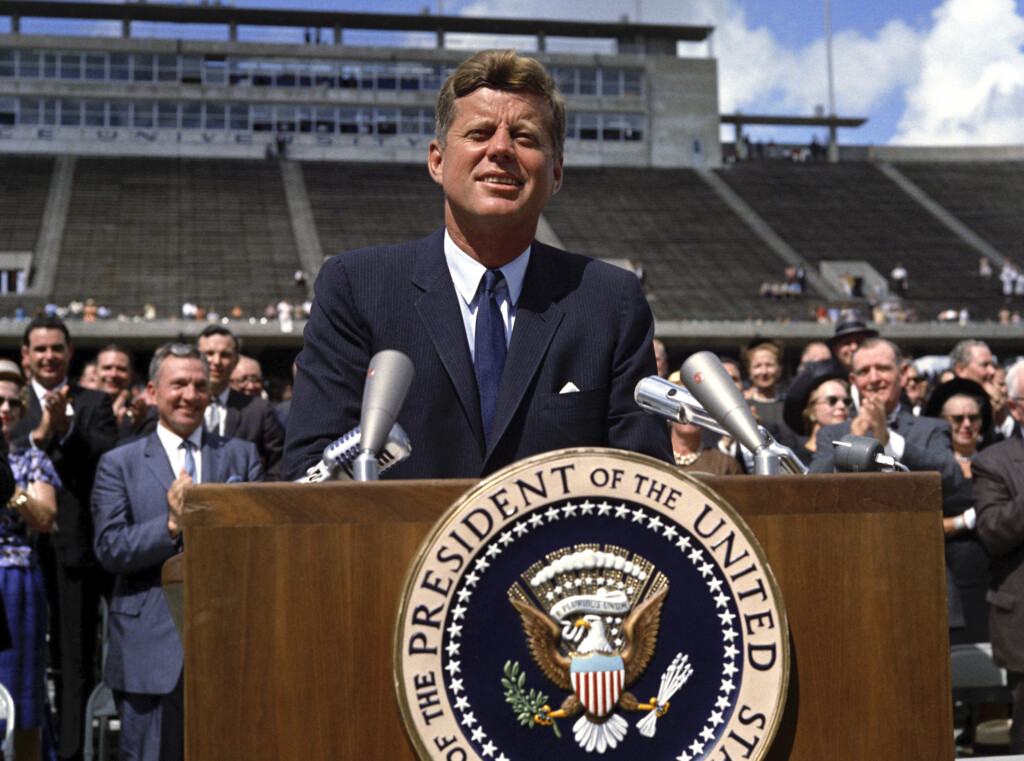 35. JOHN F. KENNEDY (1961-1963) – U.S. PRESIDENTIAL HISTORY
Jackie Kennedy was the real MVP of this era. She turned the White House into a museum, hosted sophisticated events, and even invented the concept of “fashionable politics.” Meanwhile, JFK was out there making bold moves—like putting a man on the moon—while also dealing with the very real threat of nuclear war with the Soviet Union.
The Cuban Missile Crisis: When the World Held Its Breath
If you think modern politics is dramatic, wait until you hear about the Cuban Missile Crisis. In 1962, the U.S. and the Soviet Union were one hair-trigger away from turning the planet into a giant nuclear pizza. Kennedy had to make a high-stakes decision: bluff, attack, or hope for the best? He chose blockade—basically, a diplomatic game of chicken—and for 13 days, the world waited to see if humanity would survive.
Kennedy’s handling of the crisis was legendary. He consulted with experts, kept the public calm (mostly), and even joked about it later, saying, “We were eyeball to eyeball, and the other fellow just blinked.” Turns out, the Soviets blinked first, and the crisis ended without a shot fired. Phew.
Civil Rights: When the President Said “Yes, We Can” (But Like, 50 Years Early)
Kennedy wasn’t just about space and style—he also tried to tackle civil rights, even though he knew it would make some people very unhappy. In 1963, he gave a speech supporting civil rights legislation, saying, “This is not a Democratic issue or a Republican issue. It is the American issue.” Sadly, he didn’t live to see the Civil Rights Act of 1964 pass, but his push put it on the fast track.
Kennedy’s stance on civil rights was controversial. Some Southern Democrats hated him for it, and he even got death threats. But he stood his ground, proving that being president wasn’t just about looking good—it was about doing good, even when it was hard.
 PPT - 10 th American History PowerPoint Presentation, free download
The Assassination: When the World Said “Wait, What?”
Then, on November 22, 1963, everything changed. Kennedy was shot in Dallas, Texas, while riding in an open car with his wife. The world stopped. News spread like wildfire, and suddenly, America was in mourning. Jackie, clutching her husband’s bloodstained jacket, became the face of grief for a generation.
The assassination was a national trauma. Lyndon B. Johnson took over, and the country was left wondering: “What just happened?” Kennedy’s death marked the end of an era—one of hope, youth, and possibility. It also led to the creation of the Warren Commission, which tried to figure out what the heck went down (spoiler: it’s still debated today).
Kennedy’s legacy is complicated. He was flawed—like any human—but he was also bold, charismatic, and visionary. He pushed America forward in ways no one thought possible, from space exploration to civil rights. And even though he was gone too soon, his spirit lives on in the “Ask not what your country can do for you—ask what you can do for your country” speech, which is basically the ultimate motivational poster for nerds.
Why Does JFK Still Matter?
So, why are we still talking about JFK 60 years later? Because he was that guy—the president who made the country feel young, bold, and full of potential. He turned the White House into a cultural phenomenon, pushed America into the space race, and tried to make the world a better place, even when it was hard as heck.
Kennedy’s life was short but impactful. He was young, handsome, and full of ideas, and even though he didn’t live to see all his dreams come true, his legacy is everywhere. Next time you see a rocket launch or hear a civil rights anthem, remember: JFK was there, cheering you on.
And if you ever feel like your life is too complicated, just imagine what it was like to be president in the ‘60s. Between Cold War tensions, civil rights marches, and trying to keep the White House from looking like a 1950s set, Kennedy had plenty on his plate. So next time you’re stressed, take a deep breath and think: “At least I don’t have to deal with nuclear war.”
