Merge Multiple Excel Files Into One Workbook

Alright, gather 'round, folks. I've got a tale to tell about a hero's journey, not of epic battles or magical quests, but of something far more daunting: merging multiple Exce...

Alright, gather 'round, folks. I've got a tale to tell about a hero's journey, not of epic battles or magical quests, but of something far more daunting: merging multiple Excel files into one. Now, I know what you're thinking, "This guy's lost his marbles!" But hear me out, because this story's got more twists than a pretzel factory.
Meet Our Hero: You
You, dear reader, are our hero. You've been given a task that would make Sisyphus roll his eyes - merging a gazillion Excel files into one. You're not just a mere mortal, you're a spreadsheet savior, and this is your origin story.
First Things First: The Stack
Imagine, if you will, a towering stack of Excel files, as tall as the Leaning Tower of Pisa, but far less stable. This is your challenge. Each file is a unique snowflake, with its own quirks, formatting, and data. Merging them is like trying to build a snowman in a blizzard - it's a mess, but somebody's gotta do it.
Must Read
Now, you could be a hero and do this manually. But let me paint you a picture: you, hunched over your keyboard, eyes glazing over, as you painstakingly copy and paste data. It's like watching paint dry, but with more numbers. No, no, my friend, there's a better way. There's always a better way.
Enter: The Power of VBA
VBA, or Visual Basic for Applications, is like having a tiny, obedient elf living in your Excel workbook. It's a programming language that can automate tasks, and it's about to become your new best friend.
Now, I know what you're thinking, "But I don't speak elf!" Don't worry, you don't need to be a coding whiz to tame this little guy. There are plenty of pre-made scripts out there, just waiting to make your life easier. It's like finding a treasure map to a pot of gold - or, in this case, a pot of coffee.
Merging Made Easy
Alright, let's dive into the nitty-gritty. Here's a simple, step-by-step guide to merging your files with VBA. Remember, I'm not here to bore you with technical jargon. I'm here to make you laugh, cry, and maybe even learn something.
 MS Excel Tutorial - How To Combine Multiple Workbooks Into One Workbook
Step 1: Enable the Developer Tab
First things first, you need to enable the Developer tab. It's like unlocking a secret room in a video game. Here's how: right-click on the Ribbon > Customize the Ribbon > check 'Developer'. Voila! Your secret room is now unlocked.
Step 2: Open the VBA Editor
Now, click on the Developer tab > Visual Basic. A new window will pop up. This is where the magic happens. It's like stepping into Narnia, but with more windows and less talking lions.
Step 3: Create a New Module
In the VBA Editor, click 'Insert' > 'Module'. A new, blank module will appear. This is where you'll write your script. Don't worry, it's not as scary as it sounds. It's more like writing a grocery list than coding the next big app.
Step 4: Write Your Script
Now, here's where things get interesting. You're going to write a script that merges all your files. Here's a simple example:
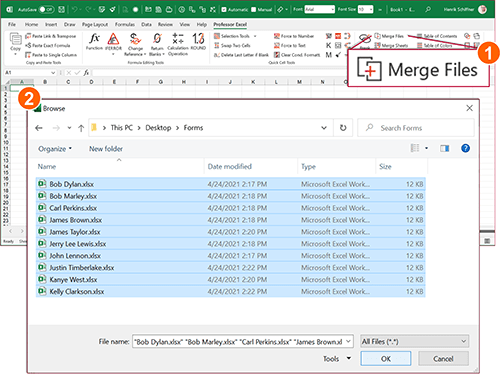 How To Combine Two Excel Files Into One Workbook - Preschool Coloring
This script will merge all the Excel files in the specified folder into the active workbook. It's like having a tiny, obedient elf, remember?
Step 5: Run the Script
Now, all you have to do is click 'Run' > 'Run Sub/UserForm'. Sit back, relax, and watch as your files merge before your very eyes. It's like watching a puzzle come together, but with more numbers and less frustration.
And There You Have It
You, dear reader, have just merged multiple Excel files into one. You've saved yourself hours of tedious work, and you've learned a new skill. You're not just a spreadsheet savior, you're a coding hero. Go forth, merge files, and conquer the world, one workbook at a time.
And remember, folks, if you ever find yourself in a situation where you're merging Excel files and you start to feel like you're losing your mind, just remember: it could always be worse. You could be merging files in Google Sheets. Now, that's a horror story for another time.
