Role Of Change Management Office Cmo

So, there I was, standing in the break room, watching as our new coffee machine was unceremoniously dumped in the corner. It was a shiny, state-of-the-art model, but it looked...

So, there I was, standing in the break room, watching as our new coffee machine was unceremoniously dumped in the corner. It was a shiny, state-of-the-art model, but it looked as out of place as a spaceship in our humble office. I turned to my colleague, "What's that all about?" I asked, raising an eyebrow. She just shrugged, "Management's latest idea to 'boost productivity', I guess."
Now, I'm not saying our old coffee machine was the best, but at least it was familiar. This new one had more buttons than a spaceship, and none of us knew how to work it. It was a classic case of change for the sake of change, and it got me thinking about the role of a Change Management Office (CMO).
What's a Change Management Office, you ask?
Imagine you're in a canoe, paddling down a calm river. Suddenly, you hit a rapid. You're thrown off course, you're paddling faster, but you're not sure where you're going. That's change, my friend. And the CMO is the guide who helps you navigate those rapids.
Must Read
Steering the Ship of Change
In the corporate world, change is constant. It could be a new software system, a merger, or even a new coffee machine. The CMO's job is to make sure these changes don't capsize your organization. They're the ones who plan, coordinate, and communicate changes to ensure they're successful and smooth.
Think of them as the behind-the-scenes heroes. They're not the ones making the big decisions, but they're the ones making sure those decisions don't sink the ship. They're the ones who ensure everyone knows what's happening, why it's happening, and how it's going to affect them.
 Aufbau eines Change Management Offices (CMO)
Why Do We Need Them?
You might be thinking, "That sounds like a lot of work. Can't we just wing it?" Well, you could. But remember our shiny new coffee machine? That's what happens when change is thrown at you without warning or explanation. People get confused, they get frustrated, and productivity can plummet.
According to a study by Prosci, 70% of change initiatives fail due to lack of management support and employee resistance. That's where the CMO comes in. They're the ones who ensure everyone's on board, that everyone understands the change, and that everyone's working together to make it happen.
So, What Does a CMO Actually Do?
A CMO's role can vary depending on the organization, but here are a few things they typically do:
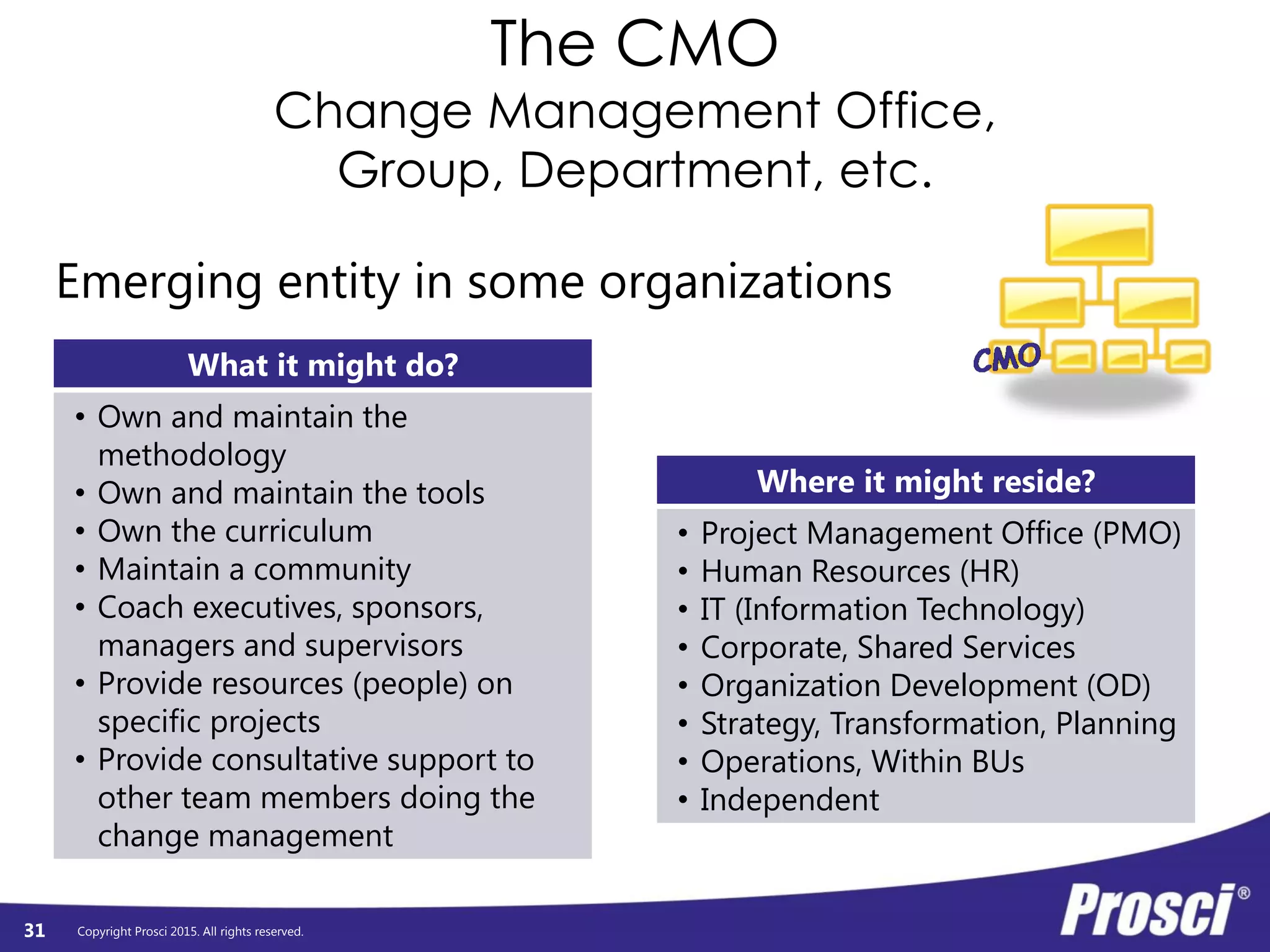 Prosci Roles in Change Management | PDF
- Change Planning: They work with stakeholders to understand the change, its impact, and its risks.
- Communication: They ensure everyone knows what's happening, when it's happening, and how it's going to affect them.
- Training: They make sure everyone knows how to use the new system, or process, or coffee machine.
- Support: They're there to answer questions, address concerns, and help everyone adapt to the change.
In essence, they're the change whisperers, the transition therapists, the transformation facilitators. They're the ones who make sure change doesn't just happen to you, but with you.
But What About the Coffee Machine?
You might be wondering what happened to our shiny new coffee machine. Well, after a few days of confusion and cold coffee, our CMO stepped in. She held a little training session, she answered our questions, and she even brought in some donuts to sweeten the deal. And you know what? That coffee machine became our new favorite. Change, it turns out, can be a good thing. But it's all about how you manage it.
So, the next time you're facing a change, remember our little coffee machine story. Change isn't something to fear or resist. It's an opportunity to grow, to improve, to get some better coffee. And with a good CMO by your side, you can navigate those changes like a pro.
