State Vision Requirements For Driving

Eye Spy: Navigating State Vision Requirements for Driving Ever wondered why your optometrist asks for your driver's license number? It's not just to make small talk. Your vis...

Eye Spy: Navigating State Vision Requirements for Driving
Ever wondered why your optometrist asks for your driver's license number? It's not just to make small talk. Your vision is a crucial part of staying safe on the road, and states have their own rules to ensure you're seeing clearly before you hit the open road.
State by State: Vision Requirements
From coast to coast, vision requirements vary. In California, for instance, drivers must have at least 20/40 vision with or without correction. Meanwhile, New York requires at least 20/30 vision. And in Texas, the Lone Star State, drivers must have a visual field of at least 70 degrees horizontally.
Some states, like Illinois, require drivers to renew their licenses in person every four years to reassess vision. Others, like Florida, allow vision tests to be done by a third-party optometrist and submitted electronically.
Must Read
What's in a Test?
Vision tests at the DMV typically involve reading an eye chart (think: the classic 'E' chart) and checking your peripheral vision. Some states, like Pennsylvania, also test for color vision. Why? Because traffic lights are color-coded, and being able to distinguish between red, green, and yellow is, well, pretty important.
Fun fact: The eye chart we use today was invented by Dutch ophthalmologist Herman Snellen in 1862. It's a testament to the enduring power of simple, effective design.
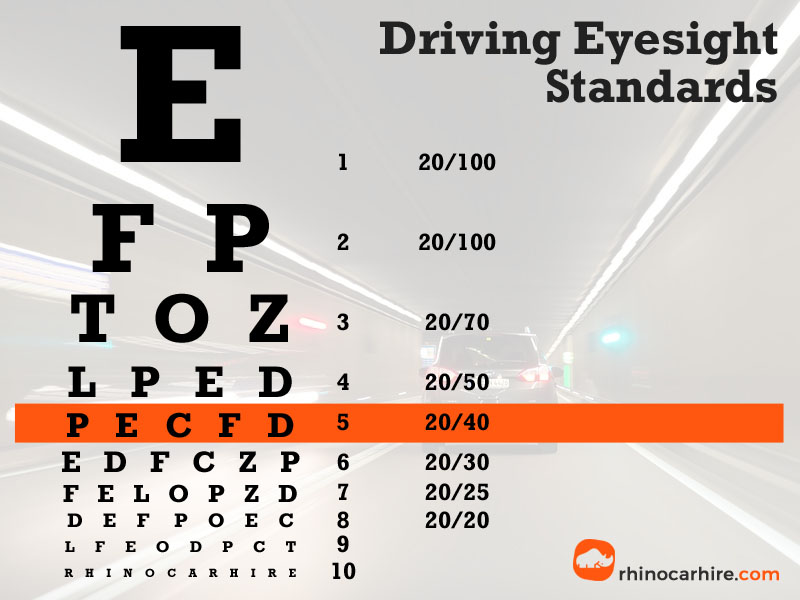 Driving Eyesight Standards by Country - Eyesight Test to Drive
Prepping for the Test: Tips from the Pros
First, don't wear your contacts or glasses to the test if you don't have to. It's easier to adjust your prescription later than to retake the test. Second, if you're nervous, take a deep breath. It's just an eye test, not a final exam (although, if you're like me, you might still feel that familiar pit in your stomach).
And remember, if you fail the test, it's not the end of the world. You can retake it, or, better yet, visit your optometrist for a comprehensive eye exam. They can help you understand your vision better and, if needed, update your prescription.
When to Seek Professional Help
Even if you pass the DMV vision test with flying colors, it's important to get regular eye exams. The American Optometric Association recommends adults get a comprehensive eye exam every one to two years, depending on your risk factors and overall health.
 DMV Vision Requirements by State (2026 Guide) | Low Vision Driving Laws
Why? Because your eyes can reveal a lot about your overall health. High blood pressure, diabetes, and even certain types of cancer can manifest in your eyes. So, regular eye exams aren't just about seeing the road clearly; they're about seeing the bigger picture of your health.
Reflections on the Road Ahead
Whether you're a seasoned driver or just starting out, your vision is your key to the open road. So, take care of it. Get regular eye exams, follow your optometrist's advice, and always wear your sunglasses (yes, even on cloudy days). Because the road ahead is long, and you want to see it all, clearly.
And remember, driving is a privilege, not a right. It's a responsibility we all share, and it starts with seeing the world clearly. So, the next time you're at the DMV, take a moment to appreciate the power of a simple eye test. It's not just about passing a test; it's about seeing the world, and the road ahead, with clear eyes and a clear mind.
