What Is The Excel Formula For Subtracting

Ever found yourself in a numbers crunch, wishing you could subtract two columns in Excel as easily as you'd whip up a batch of cookies? Well, friend, you're in luck. Today, we...

Ever found yourself in a numbers crunch, wishing you could subtract two columns in Excel as easily as you'd whip up a batch of cookies? Well, friend, you're in luck. Today, we're diving into the delightful world of Excel formulas, specifically the one that'll make your subtraction dreams a reality. So, grab your coffee (or tea, we don't discriminate), and let's get started.
Introducing the SUBTRACT Formula
Imagine the SUBTRACT formula as your very own numerical magician, ready to perform tricks at your command. It's a simple yet powerful tool that'll help you find the difference between two sets of data in a snap. And the best part? It's not as complicated as trying to understand why the '90s thought neon was a good idea.
Basic Syntax: =SUBTRACT(number1, number2)
At its core, the SUBTRACT formula follows this basic syntax. You've got your number1, which is the value you want to subtract from, and your number2, the value you're subtracting. Easy peasy, right?
Must Read
But wait, there's more! Just like a good recipe, this formula has some optional ingredients to make your results even tastier. Let's explore.
Cell References: The Secret Ingredients
Now, you might be thinking, "That's all well and good, but I've got columns full of numbers, not just a couple of values." Fear not, dear reader, for Excel has cell references to save the day.
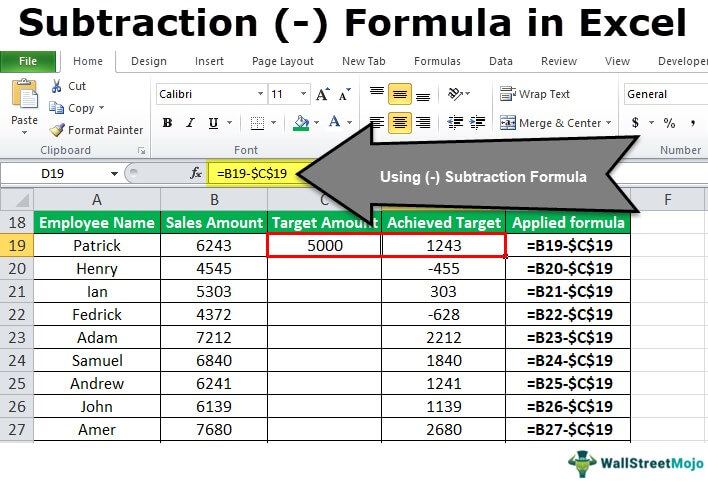
Cell references are like little arrows that point to specific cells in your spreadsheet. They allow you to use the SUBTRACT formula on entire columns, making your life a whole lot easier. Here's how you can use them:
Let's say you want to subtract Column B from Column A. You'd use the following formula: =SUBTRACT(A1:A10, B1:B10). This tells Excel to subtract every value in B1:B10 from the corresponding value in A1:A10.
 How To Subtract Numbers From Excel – PUFJY
Absolute and Relative References: The Twins
Now, let's talk about absolute and relative references. Think of them as twins - they look alike but have different personalities. Relative references change when you copy them, while absolute references stay put. Here's how you can use them:
Let's say you want to subtract a single value (let's call it X) from an entire column. You'd use an absolute reference for X, like this: =SUBTRACT(A1:A10, X). This tells Excel to subtract X from every value in A1:A10, no matter where you place the formula.
Real-Life Examples: Because Math Can Be Fun
Alright, let's bring this back down to earth with some real-life examples. Say you're planning a party and you want to know how many people can actually fit in your living room. You've got two columns: one with the total number of guests you invited (Column A), and one with the number of guests who RSVP'd (Column B). You want to find out how many people can't make it.
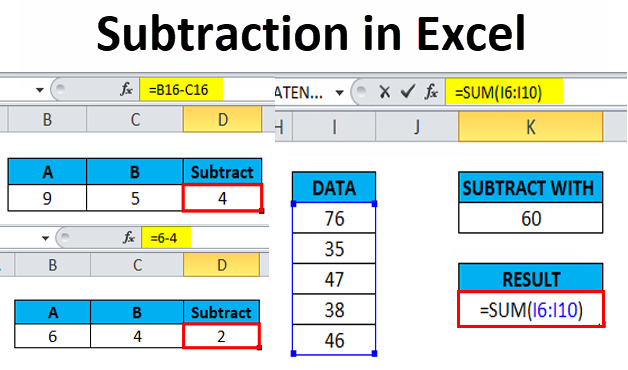
You'd use the SUBTRACT formula like this: =SUBTRACT(A1:A10, B1:B10). This gives you a column with the difference between the number of guests invited and the number who RSVP'd.
 Subtraction in Excel | How To Use Subtraction Operator in Excel?
Or maybe you're trying to keep track of your budget. You've got one column for your income (Column A) and another for your expenses (Column B). You want to know how much money you have left. You'd use the same formula: =SUBTRACT(A1:A10, B1:B10). Suddenly, budgeting doesn't seem so scary!
Fun Fact: The SUBTRACT Formula Isn't the Only Game in Town
While the SUBTRACT formula is pretty nifty, it's not the only way to subtract in Excel. You can also use the trusty minus sign (-) or the DASH function (=DASH(number1, number2)). The choice is yours, but we think SUBTRACT has a certain je ne sais quoi.
Reflection: Subtraction in Daily Life
So, there you have it - the SUBTRACT formula demystified. But this isn't just about Excel; it's about subtraction in daily life. Whether you're subtracting ingredients in a recipe, miles on a road trip, or hours in a day, subtraction helps us understand the world around us.
Next time you're faced with a subtraction problem, remember our little magician formula. With a bit of practice, you'll be subtracting like a pro. And who knows? You might even start to see the beauty in numbers - just don't tell the '90s we said that.
