What Is The Terminal Ray Of An Angle

Unraveling the Mystery of the Terminal Ray: A Fun Angle on Geometry Ever found yourself daydreaming in geometry class, wondering what the teacher meant by that 'terminal ray'...
Unraveling the Mystery of the Terminal Ray: A Fun Angle on Geometry
Ever found yourself daydreaming in geometry class, wondering what the teacher meant by that 'terminal ray' thing? You're not alone. But don't worry, we're here to demystify this concept in a fun, engaging way. So, grab a coffee (or a smoothie, if you're feeling fancy), and let's dive in.
First Things First: What's an Angle?
Before we tackle the terminal ray, let's quickly refresh our memories on angles. You know those V-shaped figures you've been drawing since kindergarten? Yeah, those. In simple terms, an angle is formed when two lines meet at a point, creating a space between them. Now, let's spice things up with a pop culture reference. Remember the iconic 'Choose Your Own Adventure' books? Angles are like that - they have two paths, or 'rays', leading away from their point, or 'vertex'.
Enter the Stage: The Terminal Ray
Now, let's bring in our star of the show - the terminal ray. Imagine you're at a buffet (because who doesn't love a good buffet analogy?). You've got your plate, and you're standing in front of a mountain of food. The 'ray' is like the path your plate takes as you reach for that delicious-looking dessert. But here's the twist - in geometry, the terminal ray is the half-line that extends infinitely in one direction from the vertex of an angle. It's like your plate's path extending forever, even after you've taken that last bite and headed back to your table.
Must Read
But why 'terminal', you ask? Well, it's because this ray 'terminates' at the angle's vertex. It's like the end of the line, or the final destination. Think of it as the last stop on a train journey - you can't go any further, so you've reached the 'terminal' point.
Let's Get Practical: Degrees and Radians
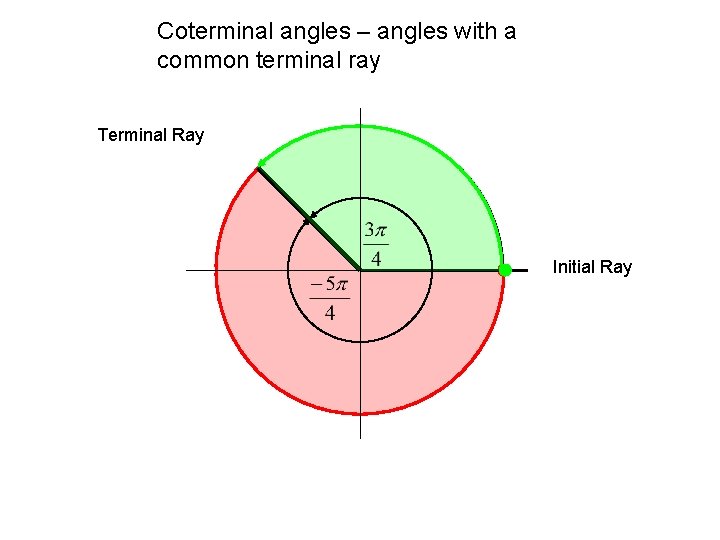
You might be wondering, "How do I measure this terminal ray thing?" Great question! We use two main units of measurement - degrees and radians. Degrees are like the classic measuring tape of the angle world. They're easy to understand and use, with a full circle (360 degrees) being the standard. Radians, on the other hand, are a bit more complex but have their uses, especially in calculus. A full circle is about 6.28 radians, or 'pi' (π), if you're feeling fancy.
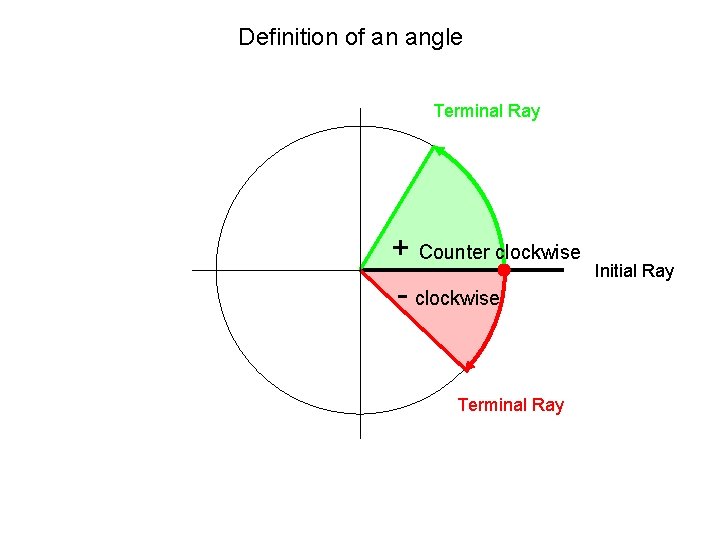
 Definition of an angle Terminal Ray Counter clockwise
Here's a fun fact: Did you know that a right angle (the one you find in a square) is 90 degrees? That's like having a quarter of a circle's worth of angle. Pretty neat, huh?
Cultural References: Angles in Art and Architecture
Angles aren't just confined to geometry textbooks. They're all around us, in art, architecture, and even nature. Take the famous Mona Lisa, for instance. Leonardo da Vinci used angles to create depth and perspective in his painting. And how about those stunning Gothic cathedrals? The pointed arches and ribbed vaults are all about angles, creating a sense of height and lightness.
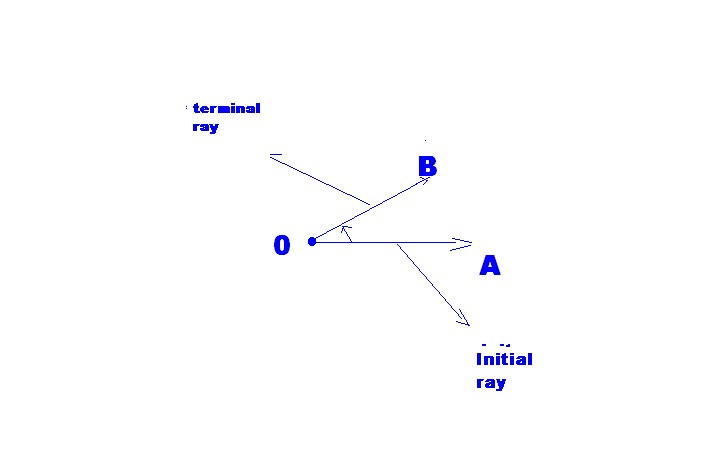 July 2010 | Learn basic math on line
Nature's got some pretty amazing angles too. Think of a spider's web - it's a masterclass in angles and geometry. Or consider the nautilus shell, which follows the golden ratio, a mathematical pattern based on angles. Isn't that fascinating?
Reflection: Angles in Daily Life
So, why should you care about angles and their terminal rays? Well, they're everywhere, from the way you hold your phone to the design of your furniture. Understanding angles can help you appreciate the world around you, from the art you see to the buildings you admire. Plus, it's always handy to have a bit of geometry up your sleeve, whether you're hanging a picture frame or trying to impress someone with your newfound knowledge at a party.
So next time you're faced with an angle, remember the terminal ray. It's the path that leads on, even when it seems like there's nowhere left to go. And isn't that a nice metaphor for life? Keep moving forward, one ray at a time.
