Adjusting Draw Weight On Compound Bow

Tuning Up Your Bow: A Walk in the Park So, you've got yourself a compound bow, huh? Congrats! You're now part of an elite club of archers who know that a little bit of tensio...

Tuning Up Your Bow: A Walk in the Park
So, you've got yourself a compound bow, huh? Congrats! You're now part of an elite club of archers who know that a little bit of tension goes a long way. But wait, you're telling me the draw weight is too much for your grandma's Thanksgiving turkey? Or maybe it's too light, and you're sending arrows flying like they're on a trampoline? Fret not, my friend. We're about to dive into the world of adjusting draw weight, and it's as easy as riding a bike (well, maybe not that easy, but you get the gist).
First Things First: What's Draw Weight?
Alright, let's start with the basics. Draw weight is the amount of force needed to pull back the bowstring to its full draw length. It's like trying to open a stubborn jar of pickles - the more force you need, the heavier the draw weight. Now, you might be thinking, "But I'm not trying to open a jar, I'm trying to shoot an arrow!" And you're right. But understanding the principle is the first step to becoming a draw weight whisperer.
Why Adjust Draw Weight?
You might be wondering why you'd want to adjust your draw weight in the first place. Well, let me tell you, it's not because you're having a mid-life crisis and decided to become Robin Hood. No, the real reasons are much more practical. Maybe you're new to archery and your current setup is giving you the strength of a wet noodle. Or perhaps you're a seasoned archer who's just had a growth spurt (yes, they happen to adults too). Whatever the reason, adjusting your draw weight can make your archery experience as smooth as butter on a hot day.
Must Read
Tools of the Trade
Before we get started, you're going to need a few tools. Don't worry, we're not talking about a full-blown workshop here. You'll need a bow press (which looks a bit like a medieval torture device, but don't worry, it's for the bow, not you), a bow square, and a set of Allen wrenches. If you're feeling fancy, you might also want a torque wrench. But don't worry, we'll keep it simple for now.
Let's Get Started!
Alright, let's dive into the nitty-gritty. The first thing you want to do is loosen the limb bolts on your bow. These are usually located at the ends of the riser (that's the fancy word for the middle part of the bow). You'll want to use your Allen wrench for this. Remember, we're not trying to unscrew them completely, just loosen them up a bit.
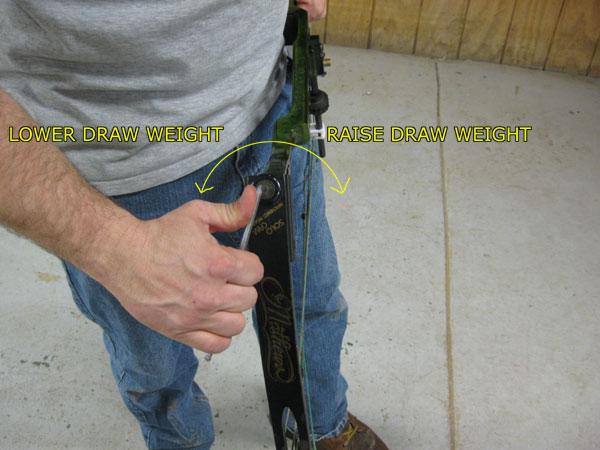 Draw Weight & Adjusting Compound Bow Draw Weight
Next, you'll want to use your bow press. This is where it starts to feel like you're in a spy movie, trying to disarm a bomb. But don't worry, it's much less dramatic. You'll want to place the bow in the press, making sure the limbs are supported. Then, you'll slowly apply pressure, allowing the limbs to flex. This is where you'll make your adjustments. Turn the limb bolts clockwise to increase the draw weight, and counterclockwise to decrease it.
But wait, how do you know how much to turn them? That's where the bow square comes in. This little gadget will help you measure the draw weight. You'll want to adjust the bolts until the draw weight is where you want it. Remember, it's like Goldilocks and the Three Bears - not too much, not too little, but just right.
 Compound Bow Draw Weight Measure at Tod Holder blog
Test, Test, and Test Again
Once you've made your adjustments, it's time to test your bow. Take a few shots, making sure to aim for the same spot each time. If you're not happy with the draw weight, don't be afraid to make more adjustments. Archery is all about patience and practice, after all.
And there you have it! You've just adjusted your draw weight like a pro. Now, go forth and shoot some arrows. Just remember, safety first. We don't want any accidental turkey hunting happening here.
