How To Make Skin Tone Color With Paint

Hey there, art enthusiast! Grab a coffee, get comfy, 'cause we're about to dive into the fun world of mixing skin tone colors. Now, don't go rolling your eyes, thinking this i...
Hey there, art enthusiast! Grab a coffee, get comfy, 'cause we're about to dive into the fun world of mixing skin tone colors. Now, don't go rolling your eyes, thinking this is gonna be as dull as watching paint dry. I promise, it's gonna be a blast!
First things first: What's the deal with skin tones?
Skin tones, my friend, are a beautiful spectrum. They range from the warm, golden hues of a summer's day to the cool, rosy tones of a winter's dawn. It's like nature's own masterclass in color theory, ain't it?
So, how do we capture this rainbow of humanity on canvas? Well, grab your palette and let's get started!
Must Read
Let's talk base colors
Before we dive into the nitty-gritty, let's talk base colors. You'll need a warm and a cool base. Think of them as your color superheroes - they're gonna do most of the heavy lifting.
For your warm base, mix Cadmium Yellow with a touch of Alizarin Crimson. For your cool base, mix Ultramarine Blue with a dab of Cadmium Yellow. Easy peasy, right?
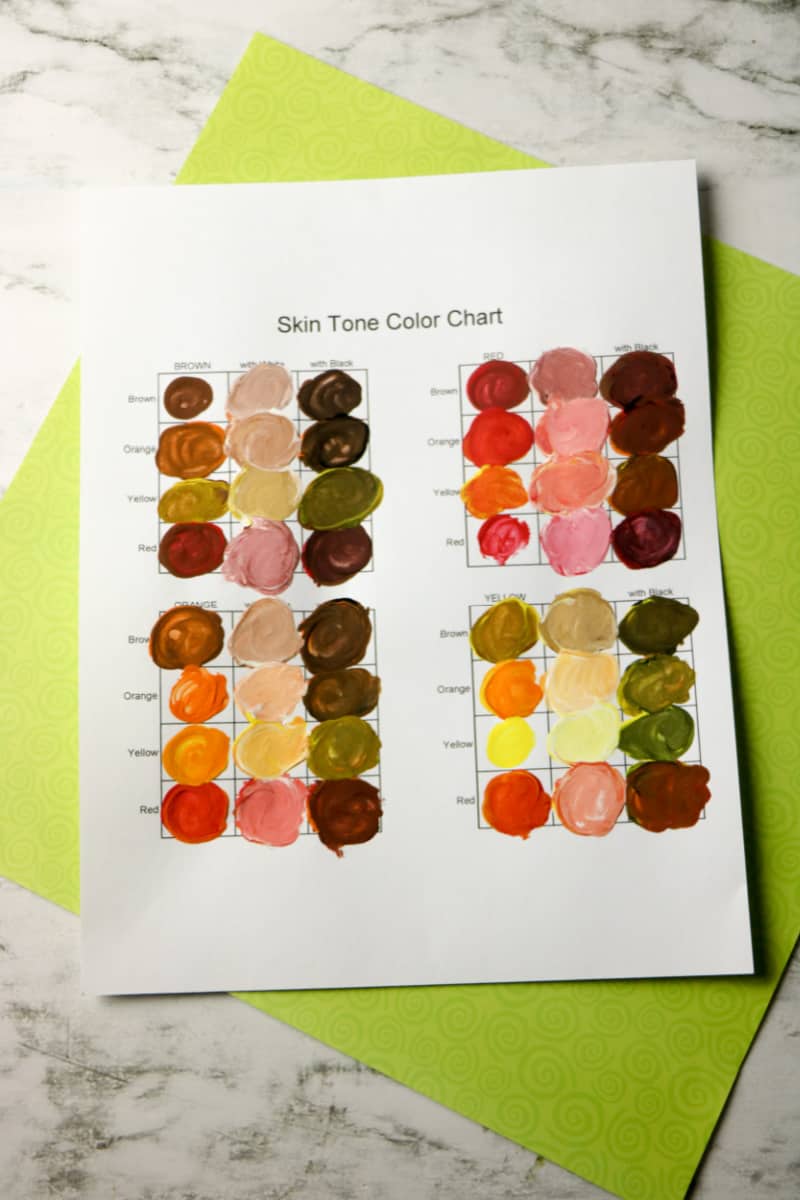
 Skin Tone Chart Example
Now, let's add some flesh to the bones
You've got your bases, now it's time to add some flesh tones. Start with your warm base and add a little Titanium White to lighten it up. Then, add a smidge of Burnt Sienna to darken it. Voila! You've just created a lovely, warm skin tone.
For your cool base, add more Titanium White to lighten it, then add a touch of Burnt Umber to darken. Et voilà! Another stunning skin tone, ready to take center stage on your canvas.
But wait, there's more!
You're not limited to just two skin tones, you know. The fun is in the mixing! Try adding a bit of Phthalo Green to your cool base for a more olive skin tone. Or, add a dash of Quinacridone Magenta to your warm base for a rosy glow.
 How To Make Paint Skin Color: Free Printable Recipe Guide - JMIR Wiki
Don't be afraid to experiment! Remember, there's no right or wrong here. It's all about finding what speaks to you.
And what about those pesky shadows and highlights?
Shadows are easy - just add a bit more of your base color and a touch of Payne's Gray. Highlights? Simply add more Titanium White to your skin tone.
 Realistic Skin Tone Worksheet
But here's a little trick: try adding a touch of Raw Umber to your highlights. It'll give them a lovely, warm glow, like the sun's just kissed your subject's skin.
So, there you have it!
Mixing skin tones is a blast, ain't it? Remember, it's all about experimenting, having fun, and finding what works for you. Don't forget to take breaks, step back, and admire your handiwork. You're creating something beautiful, one brushstroke at a time!
Now, go forth, art warrior! Your canvas awaits. And who knows? Maybe next time, we'll tackle the mysteries of mixing hair colors. Until then, happy painting!
