Is Water Boiling A Chemical Reaction

Hey there, curious mind! Let's chat about something that's as everyday as your morning coffee - is water boiling a chemical reaction? Now, don't go rolling your eyes just yet,...

Hey there, curious mind! Let's chat about something that's as everyday as your morning coffee - is water boiling a chemical reaction? Now, don't go rolling your eyes just yet, stick around. I promise, by the end of this, you'll be impressing your friends with your newfound knowledge, and we'll have a blast doing it!
First Things First: What's a Chemical Reaction?
Before we dive into the bubbling pot of water, let's quickly recap what a chemical reaction is. Imagine you're in a kitchen (because, let's face it, that's where the magic happens!), and you've got some ingredients - say, flour, water, and an egg. When you mix them together, something new happens - you get a gooey mess that, with a bit of luck, turns into a delicious cake (or a science experiment gone wrong, but let's not dwell on that). That, my friend, is a chemical reaction - a process where one or more substances (called reactants) change into one or more different substances (called products).
Now, you might be thinking, "But water boiling is just water turning into steam. There's no magic ingredient, no mixing, no mess!" And you're right. But stick with me, because things get interesting when we look a little closer.
Must Read
Meet the Stars of the Show: Molecules
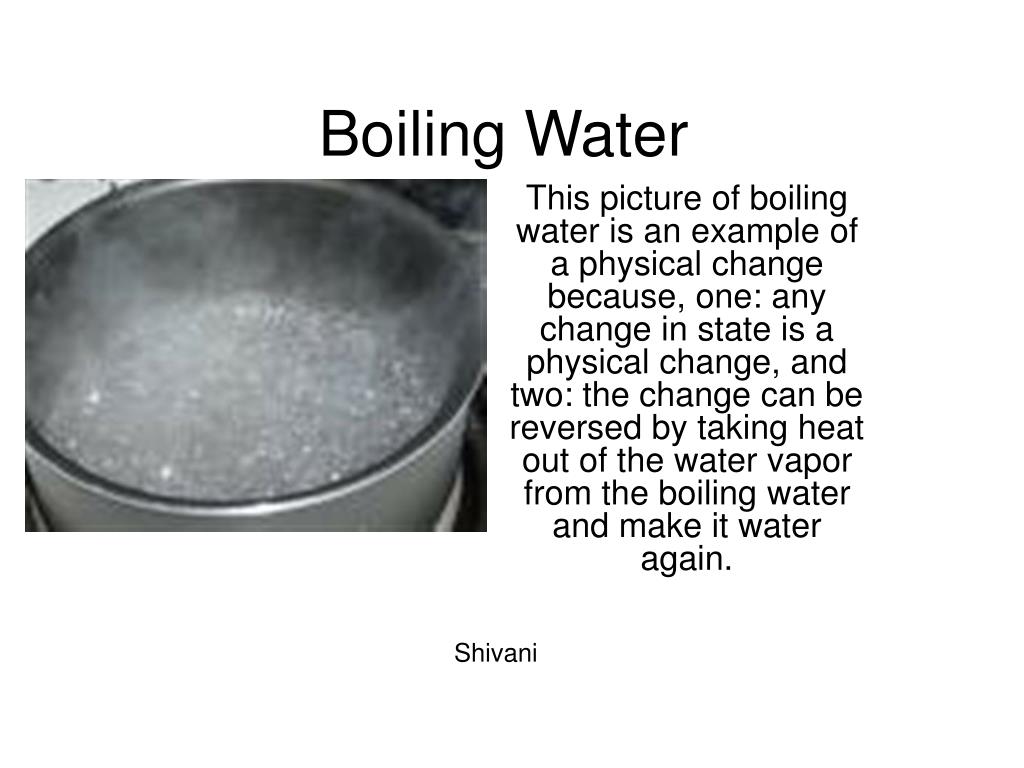
Water is made up of tiny particles called molecules. These molecules are like little LEGO blocks, and each water molecule is made up of two hydrogen atoms and one oxygen atom, stuck together by something called a chemical bond. When water is in its liquid state, these molecules are all jumbled up, bouncing around, and bumping into each other like a lively dance party.
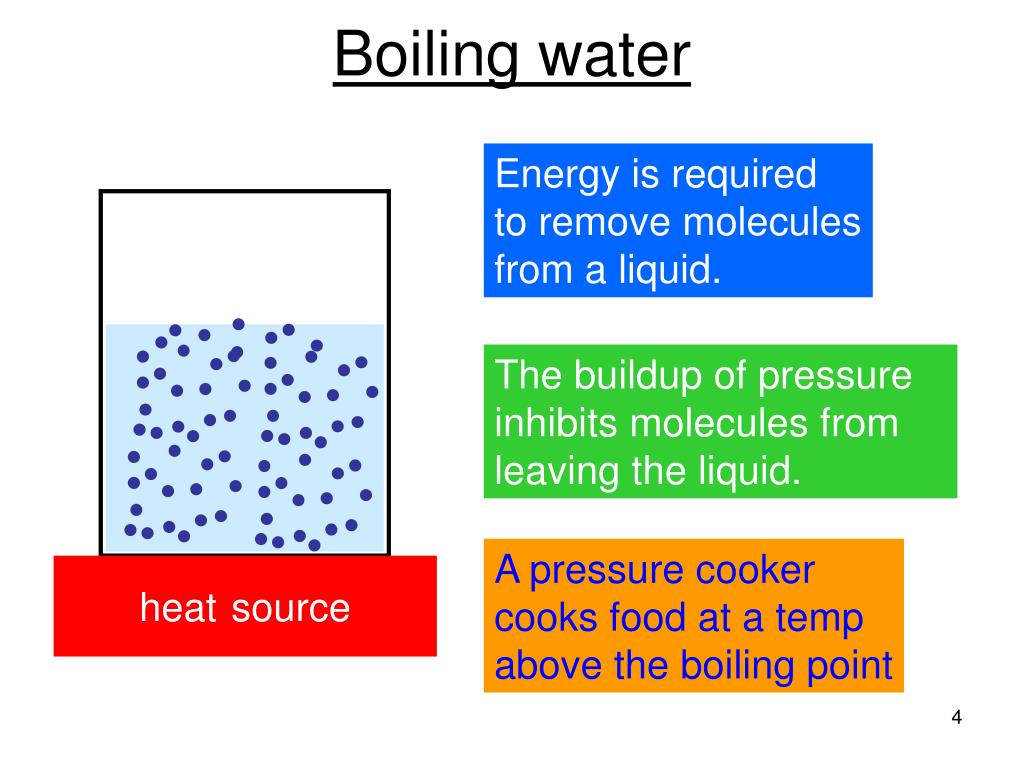
But here's where things get hot (literally)! When you heat up the water, you're giving those molecules more energy. It's like you're turning up the music at the dance party, and the molecules start moving faster and bumping into each other harder. Eventually, some of those molecules get so excited that they break free from their neighbors and fly off on their own. And guess what? Those lone molecules are what we call steam - the gas that rises from your boiling water.
 PPT - Our Physical and Chemical Change Show By: Mrs. Kapela’s Class
So, is Boiling Water a Chemical Reaction?
Now, you might be thinking, "Okay, I get it. The water molecules are changing, but is that really a chemical reaction?" Well, let's consider the definition we talked about earlier. Are there reactants? Yes, there's water. Are there products? Yes, there's steam. And most importantly, are there changes in the chemical bonds? Yes, indeed! The molecules that fly off as steam have broken their bonds with their neighbors, and they're off on their own little adventure.
So, in the end, yes, boiling water is a chemical reaction! It might not be as dramatic as a volcano erupting or a Mentos geyser, but it's a chemical reaction all the same. And isn't it amazing that something as simple and everyday as boiling water can be so fascinating when you look a little closer?
 PPT - Understanding Thermodynamics: Phase Changes, Laws, and
Why Should You Care?
You might be wondering, "Why does any of this matter? I just want my tea!" And that's a fair question. But understanding the science behind everyday things can make life more interesting. Plus, the next time you're waiting for your water to boil, you can impress your friends (or just yourself) with your newfound knowledge. And who knows? Maybe you'll even start seeing the world a little differently - with a little more curiosity and a little more wonder.
So, there you have it! Boiling water is a chemical reaction, and now you know why. Next time you're standing by the kettle, waiting for that whistle, remember the dance party of molecules and the chemical bonds breaking free. Isn't science just the best?
Stay curious, my friend, and keep exploring the world around you. After all, there's always more to discover, even in the simplest of things. And remember, the next time someone asks if boiling water is a chemical reaction, you can say, "You betcha! And let me tell you all about it..."
