Where Did The Titanic Sank On The Map

Ever wondered where that famous ship, the Titanic, took its final plunge? You know, the one that inspired the epic movie and the Celine Dion power ballad? Let's dive in, shall...
Ever wondered where that famous ship, the Titanic, took its final plunge? You know, the one that inspired the epic movie and the Celine Dion power ballad? Let's dive in, shall we?
Marking the Spot
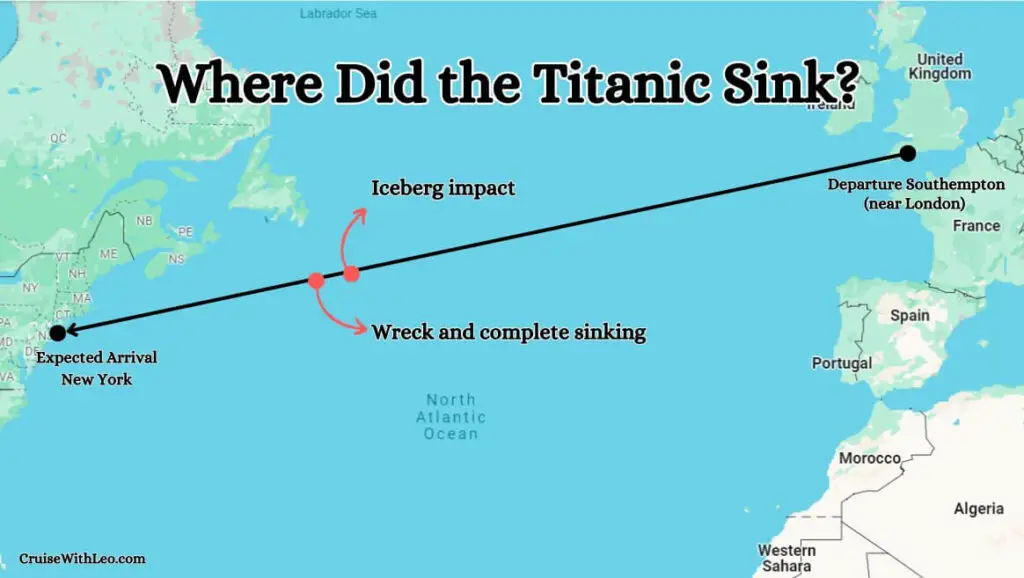
Imagine you're planning a road trip. You'd want to know where you're going, right? The Titanic's journey was no different. It set sail from Southampton, England, on April 10, 1912, with its final destination being New York City. But as we all know, it didn't quite make it.
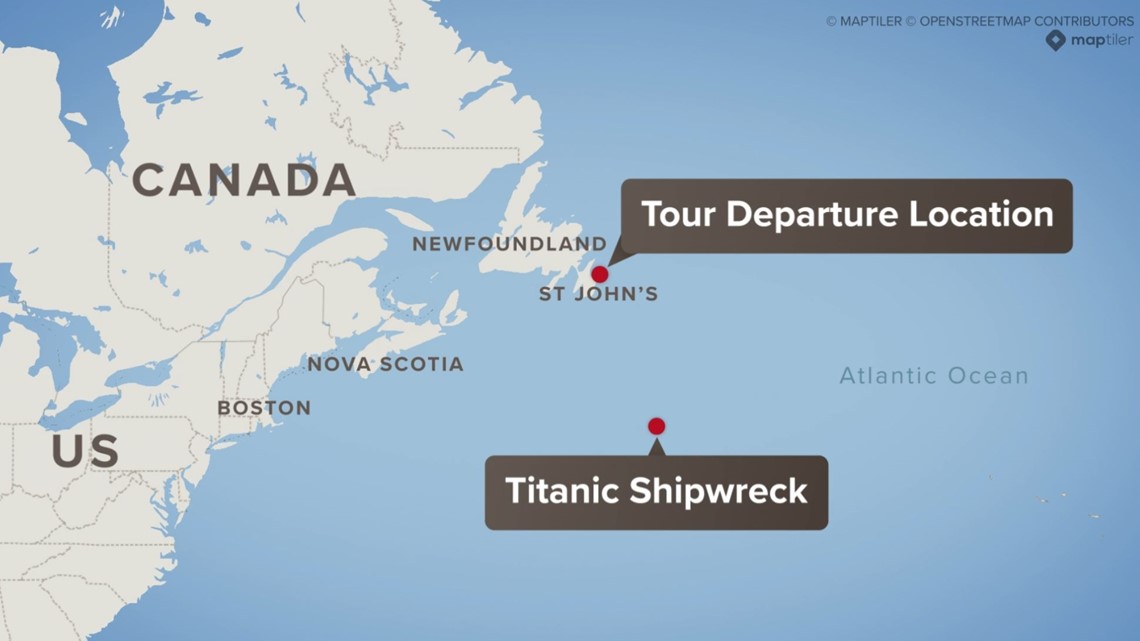
The big event happened in the North Atlantic Ocean, around 400 miles south of Newfoundland, Canada. To be more precise, it's about 370 miles southeast of Cape Race, Newfoundland. You can find the exact coordinates online - it's 41°43'52"N 49°56'49"W, if you're into that sort of thing.
Must Read
Why Should You Care?
You might be thinking, "That's all well and good, but why should I care where it sank?" Well, let me tell you, it's like when you're trying to find a good spot for a picnic. You want to know if it's by the beach, or in the shade of a big tree, right? The Titanic's final resting place tells us a lot about what happened that fateful night.
For starters, it was smack bang in the middle of one of the busiest shipping lanes in the world. Picture this: it's like trying to find a quiet spot in a bustling city park. Not easy, huh? That's why the Titanic was there - it was the quickest route between Europe and North America.
But here's where things get a bit chilly. That part of the Atlantic is known for its cold, icy waters. It's like trying to have a picnic in the snow - not very pleasant, is it? And that's exactly what made the Titanic's situation so dire. The freezing water is what caused the ship to sink so quickly.
 Where Did the Titanic Sink: Map and Full Details - Cruise with Leo
What's Left to See?
So, what's left of the Titanic today? Well, quite a bit, actually. The ship broke into two main pieces as it sank, and both of them are still down there, about 12,500 feet below the surface. That's like having a really, really deep swimming pool - one that's over two miles deep!
Over the years, quite a few expeditions have been made to the site. The first one was in 1985, led by Dr. Robert Ballard. They found the wreckage in two main pieces, with the bow (that's the front part) and the stern (the back part) about 1,500 feet apart. It's like they're still trying to get away from each other, even after all this time.
Now, you might be thinking, "That sounds like a long way down. How do they even explore down there?" Well, they use special submersibles - basically, underwater robots. They're equipped with cameras and other gadgets to help scientists study the wreckage and learn more about what happened.
 Exploring the Abyss – How Deep Is the Titanic?
Why It Matters
But why does all this matter? Well, for one, it's a chance to learn about history. The Titanic's story is a reminder of how quickly things can change, and how important it is to stay safe, even when we're having fun. It's like when you're out on a hike and you need to be careful, even if it seems like everything's fine.
Plus, exploring the Titanic's wreckage helps us understand the ocean better. We can learn about how things decay underwater, and how different creatures live and interact in such a deep, dark environment. It's like having a massive underwater laboratory!
And who knows? Maybe one day, we'll even find some long-lost treasures from the Titanic. Wouldn't that be something? It'd be like finding a time capsule from your childhood - all those memories, just waiting to be discovered.
So, the next time you're looking at a map, or planning a trip, remember the Titanic. It's not just a story from the past - it's a reminder of how important it is to stay safe, and how much there is still left to discover, even in the depths of the ocean.
