Fox Farm Hydroponic Feeding Schedule

Picture this: You’re at home, sipping your morning coffee (or tea, no judgment), and you glance over at your little hydroponic garden. It’s like having a tiny, low-maintenance...
Picture this: You’re at home, sipping your morning coffee (or tea, no judgment), and you glance over at your little hydroponic garden. It’s like having a tiny, low-maintenance farm right in your kitchen—no dirt, no weeds, just water, nutrients, and a whole lot of potential. But here’s the thing: even the most thriving indoor garden needs a little structure to keep it happy. That’s where the Fox Farm Hydroponic Feeding Schedule comes in, and trust me, it’s easier than remembering to water your houseplant just before you leave for work.
Hydroponics is basically the fancy way of saying "growing plants without soil," and it’s like giving your greens a spa day—no mud, just pure, nutrient-packed love. But plants, much like us, can’t just survive on water and sunlight alone. They need a balanced diet to grow strong, just like how you can’t live on pizza and energy drinks forever (looking at you, late-night snack attacks). The Fox Farm feeding schedule is like that well-balanced meal plan for your plants—simple, effective, and designed to keep them thriving without the guesswork.
Why Should You Care?
Let’s be real: most of us don’t have the time or space for a full-blown garden. But that doesn’t mean you can’t grow fresh, delicious herbs or veggies right at home. Imagine plucking a basil leaf straight from your windowsill to toss into your pasta—it’s like having a tiny, homegrown grocery store. Plus, hydroponics uses way less water than traditional gardening, so you’re not just saving space, you’re being a little eco-warrior too.
Must Read
And here’s the best part: it’s easier than you think. No need to be a botanist or spend hours tending to your plants. The Fox Farm schedule is designed for beginners and seasoned growers alike, with a rhythm that’s almost like a workout plan—consistent, but not overwhelming. Think of it as the "grow your own food" version of meal prepping: a little effort now means big rewards later.
The Basics: What’s in the Fox Farm Feeding Plan?
Fox Farm’s hydroponic feeding schedule is all about three main nutrients: nitrogen, phosphorus, and potassium (NPK). These are like the vitamins for your plants—each one does a specific job to keep them healthy. Nitrogen is the "growth fuel," helping leaves and stems get big and strong. Phosphorus is the "flower and fruit booster," and potassium is like the plant’s immune system, keeping it resilient against stress.
Fox Farm breaks this down into a simple routine, usually involving two main fertilizers: Big Bloom and Tiger Bloom. Think of them like the protein shake and the post-workout smoothie for your plants. Big Bloom is your go-to for the vegetative stage (that’s the "grow big, leafy" phase), while Tiger Bloom kicks in when your plants start flowering—like when you finally switch from salads to full meals after a diet.
Step-by-Step: How to Follow the Schedule
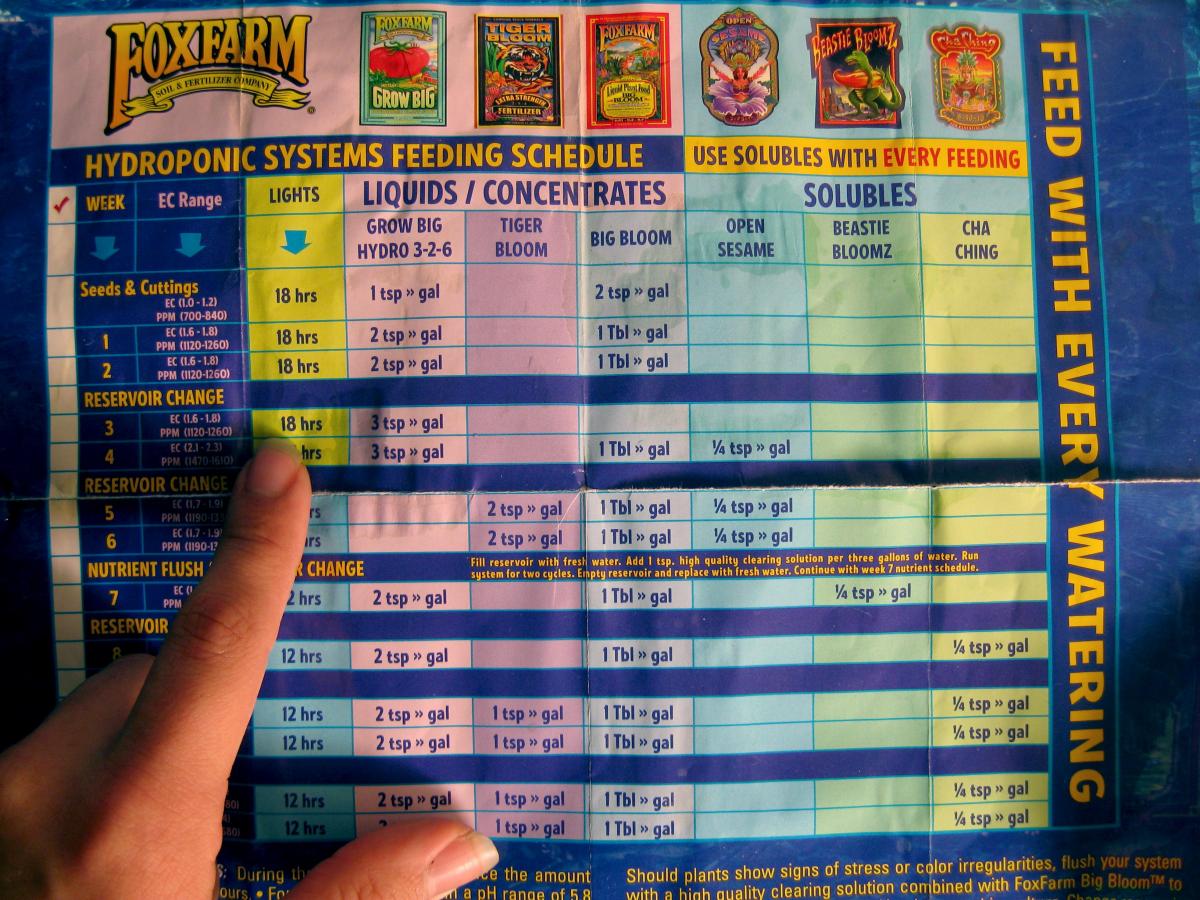
Okay, let’s get into the nitty-gritty. The Fox Farm schedule is pretty straightforward, but it’s always good to have a little guide. First, you’ll want to start with Big Bloom during the vegetative stage. This is when your plants are young and hungry, like a kid after school—full of energy and ready to grow. You’ll mix this into your water every few days, following the instructions on the bottle (usually around 1-2 mL per gallon of water).
 Fox Farm Feeding Schedule | The Highest Crop
Once your plants start showing signs of flowering—like those little buds forming, or if you’re growing something like tomatoes and they’re getting bigger—it’s time to switch to Tiger Bloom. This is the "maturity mode" for your plants, helping them produce those delicious fruits or flowers. You’ll still mix it into your water, but the ratio might change slightly, so always double-check the label.
Pro Tips: Don’t Make These Mistakes
Now, here’s where things can go wrong—if you’re not careful. One of the biggest mistakes people make is overfeeding. It’s tempting to think, "More nutrients = bigger plants!" but too much can actually burn your plants, leaving them crispy and sad. Think of it like eating too much sugar—you might get a quick rush, but it’s not good for you in the long run. Stick to the recommended doses, and your plants will thank you.
Another common slip-up is skipping the flush. After your plants have finished flowering, it’s a good idea to do a "flush" with plain water to clear out any excess nutrients. This helps your harvest taste cleaner and prevents any buildup that could harm your plants. It’s like giving your garden a little detox after a long growing season.
Real-Life Example: My Basil’s Success Story
I’ll admit, I was skeptical at first. My last indoor garden attempt ended with a sad, yellowing basil plant that looked like it had seen better days. But this time, I followed the Fox Farm schedule religiously. I started with Big Bloom during the vegetative stage, and once those little white flowers appeared (yes, basil flowers!), I switched to Tiger Bloom. Within a few weeks, I had a bushy, leafy basil plant that was practically begging me to harvest.
 Fox Farm Hydroponic Feeding Chart – YAXN
The best part? The flavor was insanely fresh. I made pesto so good, my roommates asked for the recipe. It was like I’d unlocked a secret—growing your own food isn’t just a hobby; it’s a game-changer for your meals. And the best part? It didn’t take much effort once I got into the rhythm.
Why Fox Farm Stands Out
Fox Farm isn’t just another fertilizer brand—they’ve been around for decades, and their products are trusted by growers of all levels. Their formulas are organic, which means they’re made from natural ingredients (no synthetic junk here), and they’re designed to work seamlessly with hydroponics. Plus, their customer service is top-notch, so if you ever have questions, they’re there to help.
Another reason Fox Farm shines is their transparency. They don’t hide behind complicated jargon; their instructions are clear, and their products are easy to find. It’s like shopping at a well-organized grocery store where everything is labeled and easy to grab—no mystery, no guesswork.
Final Thoughts: Give It a Try!
At the end of the day, growing your own food is one of the most rewarding hobbies you can have. It’s satisfying, cost-effective, and—let’s be honest—way more fun than scrolling through your phone. The Fox Farm hydroponic feeding schedule makes it so much easier to get started, even if you’re a complete beginner.
So, what are you waiting for? Grab some seeds, set up your hydroponic system, and give your plants the love they deserve. Before you know it, you’ll be harvesting your own veggies, saving money, and bragging to your friends about your tiny indoor farm. And who knows? You might just find yourself hooked—just like I did.
