Healthy Weight Range For 6 Foot Male

So, you're a 6 footer, huh? Let's talk healthy weight range, buddy. It's not as boring as it sounds, promise. First things first: What's a 'normal' weight? Alright, grab a p...

So, you're a 6 footer, huh? Let's talk healthy weight range, buddy. It's not as boring as it sounds, promise.
First things first: What's a 'normal' weight?
Alright, grab a pen. We're going to do some math. Don't worry, it's not like high school algebra. We're talking Body Mass Index (BMI) here. It's a simple ratio of your weight in kilograms to your height in meters squared.
For a 6 footer, that's around 18.5 to 24.9. Easy peasy, right?
Must Read
Wait, what about muscle?
Ah, the million-dollar question! BMI doesn't account for muscle mass, which can skew results. Ever seen a bodybuilder with a 'high' BMI? Yeah, that's not fat, that's gains, bro.
So, if you're packing some serious muscle, you might want to consider other measures like Body Fat Percentage or Waist-to-Height Ratio. But more on that later.
Now, let's talk healthy weight ranges
You're probably thinking, 'Okay, I'm in the 'normal' range, what does that even mean?' Well, let's break it down.
Underweight: Below 18.5
You might be thinking, 'I could use a few extra pounds, but I'm not starving myself, am I?' Probably not, but if you're below 18.5, you're considered underweight. Now, if you're an athlete with a high muscle mass, this might not apply to you.
Healthy weight: 18.5 to 24.9
This is where we want to be, folks. It's the sweet spot for reduced risk of heart disease, diabetes, and other nasties. But remember, this is just a range, not a target.
If you're at the lower end, say 18.5, you might want to aim for a bit more. And if you're at the higher end, like 24.9, you might want to consider shedding a few pounds.
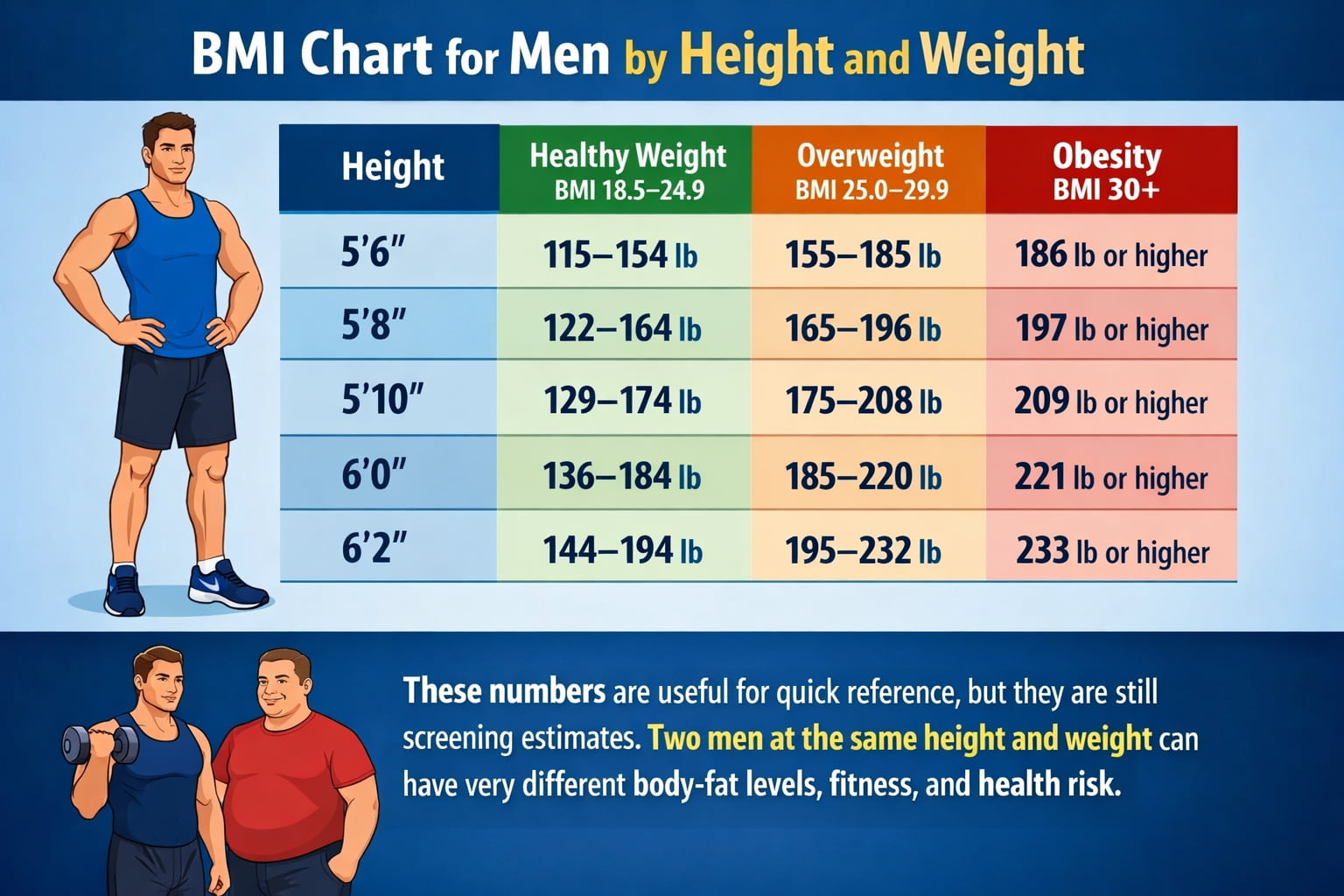 BMI Chart for Men: Healthy, Overweight, and Obesity Ranges Explained
Overweight: 25 to 29.9
Okay, now we're getting into 'overweight' territory. If you're here, it's time to make some changes. We're talking increased risk of high blood pressure, heart disease, and type 2 diabetes.
But hey, it's not all doom and gloom. Small changes can make a big difference. We're talking like 5-10% of your body weight. That's doable, right?
Obese: 30 and above
Alright, let's not beat around the bush. If you're here, you know you've got some work to do. But listen, it's not about shame-spiraling. It's about taking action.
We're talking serious health risks here, like heart disease, stroke, type 2 diabetes, and even certain cancers. But with the right plan, you can turn this around.
But wait, there's more!
Remember when we talked about muscle and BMI not being the be-all and end-all? Yeah, let's dive into that.
Body Fat Percentage
This one's a bit more involved. It's a measure of fat in your body. For men, a healthy range is 10-20%. But remember, this can vary based on age and activity level.
 What’s Your Ideal Weight According to Your Body Shape, Age And Height?
To get this number, you might need to shell out for a DEXA scan or use skinfold calipers. But if you're serious about fitness, it's worth it.
Waist-to-Height Ratio
This one's a bit more DIY. You just measure your waist and divide it by your height. For men, a healthy ratio is below 0.5.
Why's this important? Because excess belly fat is linked to all sorts of health issues, like heart disease and type 2 diabetes.
So, what's next?
Well, buddy, it's time to take action. If you're in the 'normal' range, great! Keep doing what you're doing. But if you're not, it's time to make some changes.
We're talking small, sustainable changes. Like swapping soda for water, or adding an extra walk to your day. And remember, it's not about perfection. It's about progress.
And hey, if you're feeling overwhelmed, don't hesitate to reach out to a healthcare professional. They're there to help, after all.
So, let's get moving, shall we? Your health is worth it. And remember, we're in this together. One step at a time, buddy.
