Strong Affinity Meaning In Chemistry

Hey there, chemistry enthusiast! Grab a cuppa, let's chat about something that might sound like a mouthful, but I promise, it's not as scary as it seems. We're talking about s...

Hey there, chemistry enthusiast! Grab a cuppa, let's chat about something that might sound like a mouthful, but I promise, it's not as scary as it seems. We're talking about strong affinity, yeah, you heard it right!
So, you're probably wondering, "What on earth is affinity in chemistry?" Well, imagine you're at a party. You've got your drink, you're feeling good, and suddenly, you spot someone across the room who's just your type. You've got an affinity for them, right? In chemistry, it's kinda like that. It's the force that pulls two things together, like magnets.
Now, let's talk strong affinity. Imagine you're at that same party, and you've found your soulmate. You're not just casually chatting, you're glued together, dancing the night away. That's a strong affinity. In chemistry, it's when two things are so attracted to each other, they practically become one. Think of it as the ultimate BFFs of the chemical world.
Must Read
Strong Affinity: The Bond of All Bonds
You might be thinking, "Okay, that's cute and all, but what's the big deal about strong affinity?" Well, my friend, strong affinity is the reason why some things just work. It's why water molecules stick together, why oxygen and iron rust, and why your favorite metal band is, well, your favorite.
You see, when two things have a strong affinity, they form a bond. And not just any bond, but a covalent bond. It's like they're saying, "We're in this together, for better or for worse." And that, my friend, is the basis of most of the stuff around us. From the air we breathe to the food we eat, it's all about those strong affinities.
 Electron Affinity Trend and Definition
When Strong Affinity Gets a Little Weird
Now, you might think, "This strong affinity business sounds great! What could possibly go wrong?" Well, hold onto your hats, because here's where it gets a bit weird. You see, sometimes, strong affinity can lead to some, shall we say, unexpected results.
Take, for instance, the case of the platinum catalyst. Platinum has a strong affinity for hydrogen, right? So, it should be great at helping other things bond with hydrogen, right? Wrong! Because of that strong affinity, platinum stole the hydrogen it was supposed to help bond, leaving the other guys high and dry. Talk about a party foul!
But don't worry, chemists are clever folks. They found a way around this by using a bit of trickery. They added a bit of carbon to the platinum, which weakened its affinity for hydrogen. Problem solved! And that, my friend, is how we make ammonia, which is pretty much the building block of life on this planet. Who would've thought, huh?
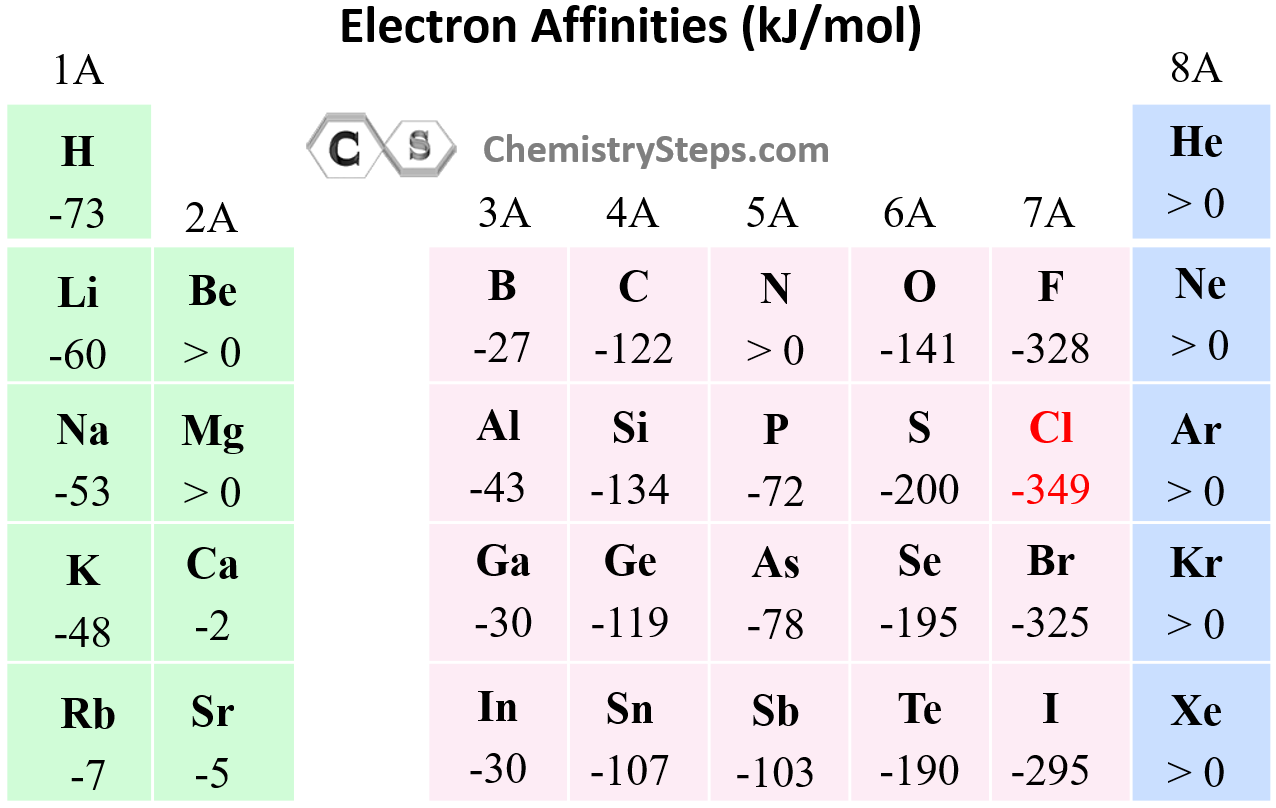 What Is Electron Affinity Of Chlorine at Judy Moore blog
Strong Affinity: The Unsung Hero
So, there you have it. Strong affinity, the unsung hero of the chemical world. It's the reason why things stick together, why reactions happen, and why we're all here, sipping our coffees and chatting about chemistry.
Next time you're at a party, or just looking at the world around you, remember, it's all about the affinities. And who knows, maybe you'll even spot a strong one or two. Just don't try to steal anyone's hydrogen, okay?
Until next time, keep your affinities strong, and your chemistry fun!
